Can Luxin Gate Hinges For Heavy Gates Help Solve Alignment Issues
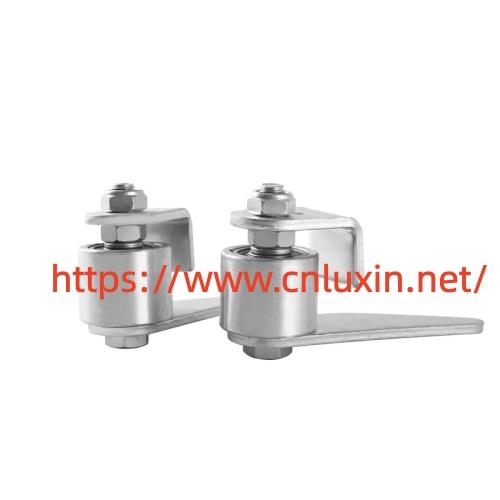
Gate Hinges For Heavy Gates play an important role in keeping large metal entrances moving smoothly, yet they are not always the first components people suspect when opening becomes difficult. A door that once swung freely may begin to scrape the ground, resist movement, or miss its latch. These changes often point to wear, alignment problems, corrosion, or movement in the supporting structure. Identifying the actual cause before replacing parts can save time and help prevent recurring maintenance issues.
One common warning sign is a gradual increase in resistance. The entrance may feel slightly stiff at first, especially after rain or a long period without use. Over time, the problem can become more noticeable. Dirt may collect around moving joints, lubricant may lose effectiveness, or rust may interfere with rotation. In other cases, the original installation may not have accounted adequately for the size and weight of the metal panel.
Start with a visual inspection. Look at the gaps around the frame, the clearance beneath the lower edge, and the position of the latch. If one corner sits lower than before, the supporting assembly may have developed excessive play. Loose fasteners, worn pivot pins, and damaged mounting plates can all affect alignment. Fresh scratches on the ground or polished marks along the frame can also reveal where unwanted contact occurs during movement.
The supporting posts deserve attention as well. A correctly sized component cannot compensate for a post that has shifted, loosened, or tilted. Changes in soil moisture, repeated impacts, deteriorating foundations, and inadequate anchoring may alter the original position. Check whether the post remains vertical and whether its base appears stable. If the support moves during operation, correcting the alignment at the mounting points alone is unlikely to provide a lasting solution.
Rust presents another challenge, particularly in outdoor installations. Rainwater, condensation, salt exposure, and damaged protective coatings can gradually affect metal surfaces. Corrosion around a pivot or attachment point may increase friction while reducing the strength of the connection. Inspect exposed surfaces, welds, fasteners, and lower frame sections for flaking coatings, deep pitting, or visible cracks. Surface discoloration may require routine care, whereas structural deterioration calls for a more thorough assessment.
When the structure remains sound, routine maintenance may resolve minor resistance. Remove accumulated dirt, check accessible fasteners, and apply a lubricant compatible with the manufacturer's recommendations. Avoid using excessive lubricant because it can attract dust and debris. Move the panel slowly after servicing and observe whether the resistance has changed. If the movement remains uneven, do not keep forcing it. Continued operation under abnormal stress may damage adjacent components.
Sometimes, replacement is more appropriate than adjustment. The original hardware may have insufficient load capacity, unsuitable dimensions, or a mounting arrangement that does not match the actual application. When evaluating replacement options, consider the total panel weight, its width, the distance between pivot points, the frequency of operation, and exposure to weather. A wide metal panel can create substantial leverage even when its weight appears manageable. Product specifications should therefore be checked against the complete installation rather than weight alone.
Material selection also affects maintenance needs. Outdoor applications may require corrosion resistant finishes, while certain industrial environments call for specific material compatibility. Bearing design, fastening methods, fabrication accuracy, and available adjustment features can influence long term serviceability. Buyers should provide suppliers with accurate measurements and photographs of the existing arrangement. Where the application involves powered operation or unusually large structures, technical confirmation is advisable before ordering replacement parts.
Installation quality matters just as much as the component itself. Pivot points should align correctly, mounting surfaces must remain stable, and the frame should maintain sufficient clearance throughout its travel. After installation, inspect the fasteners and test movement under controlled conditions. If the panel is exceptionally large, unstable, or difficult to support, leave the work to qualified professionals. Never place yourself beneath an unsupported structure or attempt to correct serious deformation by applying additional force.
For manufacturers, contractors, and maintenance teams, choosing suitable hardware begins with understanding the conditions in which the assembly will operate. Luxin provides an option to review industrial product specifications and discuss component requirements in line with individual project needs. Rather than selecting parts by appearance alone, compare dimensions, rated capacity, materials, mounting details, and environmental requirements before making a purchasing decision. To review available product information and identify options that may suit your application, visit https://www.cnluxin.net/product/ and use the relevant specifications to guide your next procurement decision.
Κατηγορίες
Διαβάζω περισσότερα
Industry analysis from Market Research Future reveals that the Japan railroads market is a significant and growing sector, projected to increase from USD 18.73 billion in 2025 to USD 32.0 billion by 2035 . At the heart of this market is the iconic Japan railroads Shinkansen , the world's first high-speed rail system. The Shinkansen, or bullet train, is not just a mode of transport; it...

In the first round of the 2026 NFL Draft, the traded the No. 2 overall pick to the so Travis Hunter could be selected by the Jaguars. As part of the trade down, the Browns picked up a ton of picks in Jimmy Howard Jersey both the 2025 and 2026 NFL Draft cla ses. And one of those picks was the 24th overall pick in this year's draft. The Browns selected Texas A&M wide receiver KC Concepcion...

A PoE switch is an advanced networking device that delivers both electrical power and data connectivity through a single Ethernet cable. PoE stands for Power over Ethernet, and this technology helps simplify network installations by reducing the need for separate power cables and electrical outlets. wifi access point devices are widely used in offices, schools, hospitals, hotels,...

In-depth insights into the engineered foam market reveal a landscape that is both dynamic and promising. The projected market size is expected to grow from USD 183.17 million in 2024 to USD 344.84 million by 2035, indicating a compound annual growth rate (CAGR) of 5.9%. Such figures highlight the critical importance of understanding market trends and dynamics for investors and industry players...
The 3D Printing Metals Market is gaining significant opportunities from healthcare applications, particularly customized implants and surgical components. Metal additive manufacturing allows medical-device companies to create patient-specific geometries that are difficult to achieve using conventional production methods. Titanium is particularly valuable because of its biocompatibility and...