How Can Zhiguang Plastic Toolbox Designs Improve Tool Organization
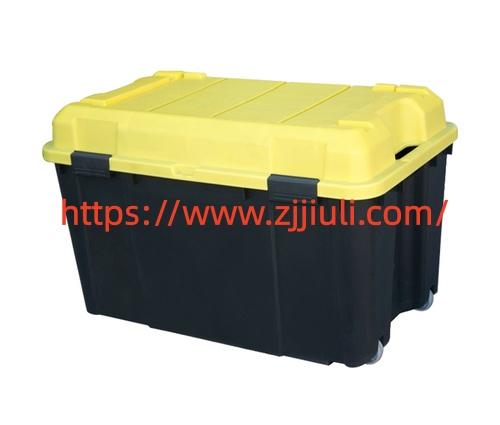
Plastic Toolbox organization can make everyday maintenance tasks easier by giving each tool and accessory a designated place. In workshops, garages, construction environments, and home repair areas, scattered equipment can slow down routine work and make small components difficult to locate. A practical storage system helps users group related items, protect equipment during transport, and maintain a clearer workspace. For businesses purchasing storage products, choosing a suitable design also means considering the types of tools used, the frequency of movement, and the available storage area.
One useful approach is to organize equipment according to its purpose. Screwdrivers, pliers, spanners, measuring instruments, and electrical accessories can be grouped into separate sections based on the tasks they support. This arrangement helps users return items to their assigned locations after completing a job. It also makes it easier to notice when a frequently used tool is missing. For maintenance teams that share equipment, a consistent layout can simplify handovers between shifts and reduce confusion when several workers use the same set of tools.
Internal compartments are especially useful for small components. Screws, nuts, washers, drill bits, and connectors can become mixed together when stored in one large space. Removable trays or adjustable dividers allow users to separate these items by type, size, or application. Transparent compartment covers can make contents easier to identify before opening the case. For users handling a variety of fasteners, labels can provide another layer of organization. The right arrangement depends on the size of the components and whether the user needs quick access during ongoing work.
Storage capacity should reflect the actual equipment carried. A compact case may suit household repairs or a small collection of hand tools, while technicians working on machinery may need additional room for measuring devices, replacement parts, and specialized accessories. Buyers should list the tools they intend to store and compare their dimensions with the internal measurements of available models. It is helpful to leave enough space for tools to be placed and removed without forcing the lid closed. Oversized cases can add unnecessary bulk, while insufficient capacity may lead users to carry several separate containers.
Material and construction also influence daily handling. Plastic cases are available in different formulations, thicknesses, and structural designs. Their suitability depends on the intended load, working environment, and expected handling conditions. Buyers should check the housing construction, hinge arrangement, handle attachment, and closure mechanism before selecting a model. For environments where cases are frequently moved between workstations, these details deserve particular attention. Cleaning requirements should also be considered, especially in workshops where dust, grease, or other residues may accumulate on the exterior.
Portability can make a difference for workers who travel between job sites. A comfortable handle and a manageable overall weight can help when equipment needs to be carried up stairs, moved between rooms, or transported in a service vehicle. The closure should remain secure during normal movement, and tools should be arranged to reduce unnecessary shifting inside the case. Heavy equipment should be positioned with care, and users should follow the manufacturers guidance for load limits and handling. Where specialized instruments are involved, additional protective inserts may help keep sensitive items separated.
Zhiguang provides a brand option for buyers evaluating storage products for different work settings. When comparing available models, purchasing teams can consider the internal layout, case dimensions, material specifications, carrying features, and intended applications. Distributors may also need to review packaging, order quantities, customization possibilities, and production requirements when sourcing products for resale. Clear specifications help manufacturers understand what the customer needs and support more efficient communication during the ordering process.
Good organization also depends on consistent habits. At the end of each task, users can return tools to their assigned sections, remove unnecessary items, and check whether any accessories need cleaning or replacement. Periodic reviews help prevent unused components from occupying valuable space. Businesses can also establish a standard arrangement for frequently used equipment so that workers can locate items without repeatedly reorganizing the contents.
Choosing a suitable case is therefore part of a broader approach to workplace organization. By combining useful compartments, appropriate capacity, convenient handling features, and consistent storage habits, individuals and businesses can create a system that fits their daily routines. Buyers interested in tool storage products and related manufacturing options can visit https://www.zjjiuli.com/ to review the company website and consider which available solutions may suit their operational requirements.
Catégories
Lire la suite
What Maintenance Tips Help Extend Automatic Gluing Machine Service Life? Packaging production depends on stable equipment performance, especially when factories require continuous carton processing and accurate adhesive application. An Automatic Gluing Machine plays an important role in modern packaging lines by supporting folding, gluing, and forming processes. Proper maintenance allows...

Holding the No. 1 pick is typically a way for a team in the NFL to fix its future. Whether it's a team that dealt with injuries, one that has struggled for a few years, or anything in between, it's usually a Dwayne Bacon Jersey great opportunity. However, the understand that having the first pick doesn't nece sarily mean everything will work out. Owner Mark Davis recently spoke about what...

The , after trading down in the NFL Draft's first-round, owned the No. 33 overall pick. With that pick, as , the 49ers are drafting Ole Mi s wide receiver De'Zhaun Stribling. It's a fascinating pick, as the 49ers are picking him over Denzel Boston. The Ole Mi s WR over the Washington WR is a bit of a surprise, as Boston had first-round buzz at one point this offseason. 2026 NFL DRAFT HQ: | |...
The global 5G NR Router Market is on the brink of a transformative era, with projections indicating a substantial increase in market size. As demand for high-speed connectivity accelerates, the market is anticipated to reach USD 52.58 billion by 2035, driven by a robust compound annual growth rate (CAGR) of 9.8%. This growth can be attributed to a myriad of factors, including the urgency for...

Electric Surf Boat selection has become an interesting topic for people who want to enjoy new ways of spending time on the water. Before making a decision, buyers usually think about riding habits, battery performance, operation methods, and transportation needs. Zannxtech develops water products with attention to practical design, user comfort, and different activity scenarios. When choosing...