DSSC Solar Cells Advance Building Integration

The integration of photovoltaic generation into building envelopes without compromising aesthetics or function is being advanced by DSSC solar cells that offer semi-transparency, colour flexibility, and good performance under diffuse light. These characteristics make them suitable for windows, facades, and interior surfaces where conventional panels are impractical.
Report Key Statistics
Building-integrated photovoltaics represents a growing segment as energy codes tighten and developers seek to demonstrate sustainability credentials. DSSC technology competes in this space on design flexibility rather than raw efficiency.
Commercial activity is concentrated in demonstration buildings and premium projects where design considerations justify higher cost per watt. As manufacturing scales and stability improves, broader adoption is expected.
Industry Trends: Aesthetic Flexibility and Multi-Functionality
The dominant trend is exploitation of aesthetic flexibility. DSSC cells can be produced in various colours and transparency levels, allowing designers to match architectural intent while generating power.
Multi-functionality is emerging as a design principle, with cells integrated into shading devices, canopies, and noise barriers that provide additional benefits alongside electricity generation.
Challenges: Efficiency Trade-offs and Durability
Transparency reduces efficiency because less light is absorbed, requiring designers to balance generation against visual requirements. This trade-off limits the energy contribution of transparent installations.
Durability under façade conditions, including thermal cycling and moisture exposure, requires robust encapsulation and careful system design.
Future Outlook: Standardisation and Certification
Standardised testing and certification specific to building-integrated products would accelerate adoption by giving specifiers confidence in performance and longevity claims.
Integration with building management systems will allow generation data to inform energy management and support performance verification.
Expert Discussion: Specifying DSSC for Buildings
Specification should consider orientation, shading, and maintenance access alongside electrical performance. Early collaboration between architects and photovoltaic specialists avoids costly redesign later.
Warranty terms and degradation guarantees should be scrutinised, since building-integrated installations are difficult and expensive to replace.
Conclusion
The Electrical Transmission Distribution Market frames the grid context for building-integrated generation, and DSSC solar cells offer a design-led pathway into that market. While challenges related to efficiency and durability persist, aesthetic flexibility and multi-functionality continue to expand applications. Standardisation and certification will define the competitive landscape through 2035.
Explore additional reports to understand evolving market landscapes:
Europe Offshore Wind Installations Market
Middle East & Africa Fuel Cell Market
Middle East and Africa Renewable Energy Market
Middle East & Africa Floating LNG Power Vessel Market
Asia Pacific Sustainable Aviation Fuels Market
Europe Sustainable Aviation Fuels Market
United States Seismic Services Market
Catégories
Lire la suite
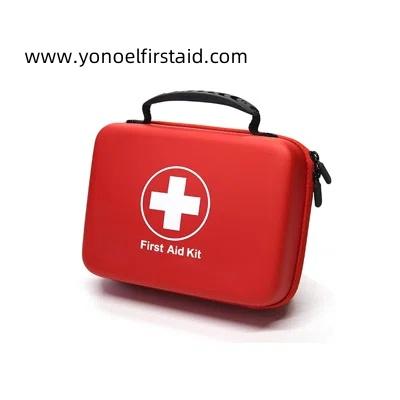
Selecting a reliable Yonoel First Aid Box Manufacturer ensures that every first aid box meets the highest standards of organization, portability, and safety. These manufacturers focus on producing practical solutions that are user-friendly and durable, making essential supplies easily accessible during minor emergencies or accidents. Quality materials and thoughtful design guarantee that...
Steinhatchee, Florida is a quiet Gulf Coast destination known for its natural springs, fishing spots, and relaxed coastal lifestyle. Many travelers search for camping near Steinhatchee FL to enjoy waterfront views, outdoor recreation, and peaceful RV stays. At the same time, RV owners often wonder about local parking rules and frequently ask, Can you park an RV on the street? Understanding both...

Regional differences play a major role in determining the future direction of the global heavy fuel oil industry. Energy availability, industrialization, maritime activity, environmental regulations, refinery infrastructure, and fuel prices vary considerably across economies, creating different demand patterns from one region to another. The Heavy Fuel Oil Market was valued at USD 109.96...

The solar drying systems market is experiencing significant expansion, driven by the increasing demand for efficient, sustainable, and cost-effective drying solutions across agriculture and food processing industries. According to Market Research Future, solar drying systems have evolved from simple, passive designs to sophisticated, hybrid systems that integrate solar energy with...

In the demanding environments of mining, oil and gas extraction, and large-scale construction, reliable fluid handling is non-negotiable. Industrial submersible pumps are the heavy-duty workhorses that meet these challenges, designed to operate fully submerged in harsh conditions to pump water, slurry, and other corrosive or abrasive fluids. Insights published by Market Research...