The Qi Connection: How Automotive Wireless Charger Qi Technology Powers Seamless In-Car Charging
According to Market Research Future, the automotive wireless charger market was valued at USD 2.025 billion in 2024 and is projected to reach USD 14.21 billion by 2035, exhibiting a remarkable compound annual growth rate of 19.38% during the forecast period. This explosive growth is driven by consumer demand for convenience and the widespread adoption of Automotive wireless charger Qi technology, which has become the global standard for inductive charging in vehicles. Qi has transformed the driving experience by eliminating the tangle of cables that once cluttered vehicle interiors.
The Qi standard, developed by the Wireless Power Consortium, provides a universal specification for inductive charging that ensures compatibility across devices and charging pads. For automotive applications, this standardization is critical: consumers expect their smartphones to charge wirelessly regardless of which vehicle they drive or which phone they carry. Qi certification guarantees that a device and charger will work together, eliminating the compatibility uncertainty that plagued early wireless charging systems.
The technology behind Qi charging relies on electromagnetic induction. A transmitter coil in the charging pad generates an alternating electromagnetic field, which induces a current in a receiver coil in the device being charged. This current powers the device's battery charging circuit. Modern Qi systems in vehicles achieve charging efficiencies of up to 90%, rivaling the performance of wired charging for many applications. The charging pad is typically integrated into the center console or dashboard, providing a convenient resting place for devices while they charge.
The evolution of Qi technology has brought significant improvements in charging speed and functionality. Early Qi systems delivered only 5 watts of power, sufficient for maintaining battery level but slow for meaningful charging. Modern Qi systems support 15 watts and higher, enabling rapid charging of compatible devices. The Qi2 standard, introduced recently, adds magnetic alignment that ensures optimal coil positioning for maximum efficiency, similar to the magnetic attachment system used in some smartphone accessories.
The automotive industry has embraced Qi charging as a premium feature that enhances the ownership experience. Luxury vehicles were early adopters, offering wireless charging as standard equipment. The technology has since cascaded to mainstream vehicles, with many mid-range models now offering wireless charging either as standard or optional equipment. The integration of Qi charging into vehicle design has become a mark of modernity, signaling that a vehicle is equipped with the latest technology.
The market dynamics of automotive wireless chargers reflect the growing demand for this feature. The Qi standard holds the largest market share among compatibility options, driven by its universal adoption. Proprietary standards are the fastest-growing segment, as some manufacturers develop custom solutions that offer unique features or enhanced performance. The fast charging segment, delivering 25 to 50 watts, holds the largest share by charging speed, while standard charging is the fastest-growing segment as more vehicles adopt the technology.
The benefits of Qi charging extend beyond convenience. The elimination of cables reduces clutter and wear on charging ports, which can become damaged from repeated plugging and unplugging. The wireless connection reduces the risk of distracted driving, as drivers can simply place their phone on the pad rather than fumbling with cables. For vehicles with multiple passengers, Qi charging pads can accommodate multiple devices simultaneously.
The challenges facing Qi charging adoption include the need for precise device placement, as misalignment can reduce charging efficiency or prevent charging entirely. The charging speed may be slower than wired charging for some devices, particularly those with large batteries. Heat generation during charging can affect device performance and battery life. Manufacturers are addressing these challenges through improved coil designs, thermal management systems, and the Qi2 standard's magnetic alignment.
Regional variations in Qi charging adoption reflect differences in consumer preferences and vehicle markets. North America leads with approximately 45% market share, driven by high smartphone penetration and consumer demand for convenience. Europe follows with about 30% share, supported by premium vehicle sales. Asia-Pacific represents the fastest-growing region, with expanding vehicle production and increasing consumer expectations.
Looking ahead, the future of Qi charging in vehicles will be shaped by continued technological advancement and evolving consumer expectations. Higher power levels will enable faster charging, approaching the speed of wired connections. The integration of Qi charging with vehicle infotainment systems will enable new functionality, such as displaying charging status and notifications. As the market grows toward USD 14.21 billion by 2035, Qi charging will become an expected feature in vehicles of all segments. For comprehensive market analysis and technology trends, explore the detailed Automotive Wireless Charger Market report.
Access detailed findings to navigate market complexities:
Medical Device Calibration and Repair Services Market
Medical Device Outsourcing Market
Medical Device Repair and Maintenance Services Market
Categorias
Leia mais
The most recent2026 NFL no cost company: Large becoming criteria for 20 contenders ESPNThe merchandise: Added total previously mentioned high quality. Veach's observe history is toward often lean upon veterans with scaled-down contracts or unheralded potential clients at cornerback, trusting that Spagnuolo can attain additional out of people defensive backs than other individuals. McDuffie and...

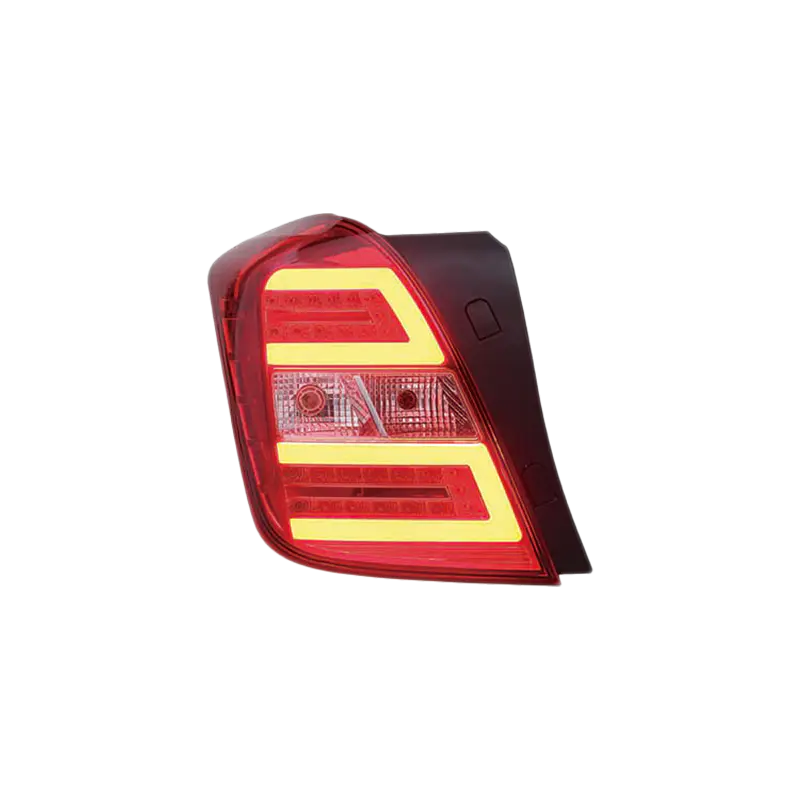
Rear lighting has a demanding role because it communicates several vehicle actions without requiring words. Braking, turning, maintaining rear visibility, and reversing each require a clear lighting signal that can be recognized under changing road conditions. For this reason, LED Stop Turn Tail Reverse Lights have attracted attention from vehicle owners, repair businesses, distributors,...
The shift toward home healthcare is transforming the Blood Pressure Cuffs Market, as more patients seek convenient and accessible ways to monitor their blood pressure. Home healthcare is emerging as the fastest-growing end-user segment, driven by the increasing prevalence of hypertension and the growing preference for self-monitoring. This trend reflects broader changes in healthcare delivery,...

The decision between an affordable pair of Tight Sports Shorts and a premium-priced alternative often presents a dilemma for any fitness enthusiast. The price tag on the shelf tells one story, yet the experience of wearing each pair through a demanding workout can tell an entirely different narrative. A lower initial cost might seem attractive at the point of purchase, but the true measure...

The modern electrical grid is undergoing a profound transformation, evolving from a centralized, one-way system to a decentralized, bidirectional network of distributed energy resources. This increasing complexity demands a new level of intelligence, and power management systems are the critical tools that provide it. These integrated hardware and software platforms monitor, control, and...