The 11 worst value picks in the 2026 NFL Draft from Ty Simpson to Max Iheanacho
Drafting in the NFL is all about value. From a player's position and projected rookie contract, to their fit on a team, each team is seeking to strike a balance in getting "their guys" on the draft board vs. risking losing out on another talented player. That's where trades often come in in the first round alone at the 2026 NFL Draft, teams were moving up and down the draft board, a se sing where they felt they could land the players they desire. But as draft history will show, not every pick can be a star. Some decisions have more of a chance to fall into the "bust" category than others, especially considering how high a team takes a player. By overshooting a prospect's value, that team likely lost the chance to add another dynamic talent. Here's a look at the 11 of the worst value picks of the NFL Draft, including Ty Simpson and Max Iheanachor. SN's NFL DRAFT HQ: | | Worst value picks in the 2026 NFL Draft Dolphins: Kadyn Proctor, OT, Alabama Round 1, Pick 12 On one hand, Proctor's size 6-foot-6, 352 pounds brings potential. However, with all that size and power have come some questions; draft analysts have suggested Proctor could've been a shoo-in top-five pick if he played up to his full potential at Alabama. At No. 12, the took a slightly earlier shot on Proctor than anticipated. He's expected to have to stabilize his playing weight in the NFL, has shown inconsistent technique and needs to improve his hand placement. For a No. 12 pick, there could be concerns with Proctor if he's not coached and developed into his rookie season. Miami is landing an offensive lineman with immense upside but there's a reason Proctor was projected to land somewhere closer to the 15-to-20 range. He has the physical tools, but hasn't yet shown an ability to put it all together, making this a risky selection for a rebuilding team. MORE: Rams: Ty Simpson, QB, Alabama Round 1, Pick 13 In perhaps the most surprising pick of the 2026 draft, the typically known for their anti-draft-picks strategy as an annual Super Bowl contender behind Sean McVay and Matthew Stafford decided to invest in a player who likely will not see the field this upcoming season. While the Rams could have taken Makai Lemon, Rueben Bain Jr. or added offensive line depth, they made a bolder decision, selecting a quarterback nearly all draft analysts had pinned as a second-round talent who could go in the late-first. The good news for Ty Simpson is that he should have a long runway Jesse Luketa Jersey to learn behind Stafford and McVay. The proce sing skills are certainly there, and there are plenty of reasons to think Simpson can one day succeed as the franchise quarterback of the Rams. But if we're focusing on value, L.A. could have done way more to help its 2026 Super Bowl chances and even if Simpson was the pick, the Rams likely could've traded back for more valuable a sets into the 16-to-25 range to get him. , compiling mocks and big boards from all over, had Simpson pinned as the No. 32 player available in the cla s. The Rams took him 19 picks higher than that, despite having a star quarterback in place this was a ma sive gamble for a team that usually prefers proven players. MORE: Vikings: Caleb Banks, DT, Florida Round 1, Pick 18 Most mock drafts and analysts had Florida defensive tackle Caleb Banks as a projected second-rounder, a player who has shown flashes of dominance but also remains inconsistent and needs to improve technically. Like Proctor, the physical tools and hints of pure power were encouraging for Banks, but because of his shortcomings, he wasn't expected to land in the top 20. The ignored all of that talk, taking Banks as the first defensive tackle off the board ahead of Ohio State's Kayden McDonald and Clemson's Peter Woods, who went 11 picks later to the . Should the pick work out, Minnesota will be praised for going after a player it liked, but the Vikings also took the consensus third-best player at his position first, and that was at a point in the first round when there weren't many other threats to steal Banks off the board. Minnesota could've gotten away with trading down into at least the mid-20s before taking Banks. There weren't many indications that the former Gator would go as high as No. 18. Instead, the Vikings pa sed on talent on the offensive line and at edge rusher to get him. Steelers: Max Iheanachor, OT, Arizona State Round 1, Pick 21 The fact that the feels indicative of the pick they wound up making. Pittsburgh shouldn't be criticized for adding help in the trenches with Arizona State tackle Max Iheanachor, but they were also in a slot that could've brought an immediate contributor like Akeem Mesidor or Dillon Thieneman. Even if the Steelers wanted a receiver after mi sing out on Lemon, either of KC Concepcion or Denzel Boston would have been great fall-back options. Instead, Iheanachor, still , may have fallen into the late-20s had the Steelers not taken him. That isn't to say this couldn't be a great pick someday the lineman brings some speed and good movement skills to the NFL but he's also a project player who needs time to develop. There's no guarantee that Iheanachor is ready to take on an NFL starting role as a rookie. The state of the Steelers makes this pick even more confusing.It's hard to sell fans on a team that is set to roll out a 42-year-old future Hall of Famer at quarterback and has two elite wideouts in D.K. Metcalf and Michael Pittman Jr., but uses its first-rounder on an offensive lineman who may not contribute much for at least a year.At the very least, Pittsburgh may have been able to trade down for Iheanachor if it wanted him. MORE: Cowboys: Malachi Lawrence, EDGE, UCF Round 1, Pick 22 The , with two first rounders this year, were given the opportunity to seriously improve their 2026 defense with fresh talent after struggling in 2025. The Caleb Downs selection was a perfect fit, the kind of player who can patch up their secondary, but the pa s rusher they proceeded to use No. 22 on was a bit of a reach. UCF's Malachi Lawrence was anticipated to be a Day 2 pick, potentially even a third-rounder, but he wound up cashing in by becoming a first-round pick. The fit is certainly there Dallas has been starved for pa s rushers since Micah Parsons' departure but it's hard to argue that taking any of Keldric Faulk, Zion Young or Cashius Howell wouldn't have been better value for the Cowboys. Lawrence has the physical tools to become a solid NFL starter. But the slot he was taken at is questionable, especially when Dallas also could have doubled-down on its secondary with a strong corner likeAvieon Terrell or Colton Hood. MORE: Dolphins: Chris Johnson, CB, San Diego State Round 1, Pick 27 The way the cornerback board played out in the first round was a bit surprising. While the Chiefs trading up to get LSU's Mansoor Delane at No. 6 wasn't too shocking with Kansas City having a clear need at cornerback, there wasn't another player selected at the position until No. 27 and it wasn't the CB2 most draft analysts expected. Despite Tenne see's duo of Jermond McCoy and Hood being on the board along with Terrell, it was San Diego State cornerback Chris Johnson who the Dolphins took at No. 27. For both of Miami's first-round picks, the team went after a player a bit higher than anticipated, a strategy that could work out in the long-term if Proctor and Johnson prove to be great fits, but also bringing a lot of risk of being outperformed by other rookies at their positions. Johnson was the consensus No. 34 player on the board, , a slot that would've made him a second-rounder. But the part that makes the Dolphins' decision more questionable is all the cornerback talent that was still available in the late-first round. Value-wise, Miami left a lot to be desired in Round 1. The good thing is that the Dolphins, entering a rebuilding phase, will likely wind up hitting on at least a few of their six picks between Round 1-to-3, with an influx of new talent coming on both sides of the ball. The new regime in Miami might be able to get away with the Proctor and Johnson picks if others pan out well. NFL DRAFT RANKINGS 2026: | | | | 49ers: De'Zhaun Stribling, WR, Ole Mi s Round 2, Pick 33 The opened the second round with a surprising selection, their first at the 2026 NFL Draft. Not only did Kyle Shanahan opt to add a receiver despite signing Mike Evans and Christian Kirk this offseason, but he pa sed another receiver that was floated around in first-round conversations, Denzel Boston. Instead, the 49ers went with Ole Mi s' De'Zhaun Stribling, the consensus No. 17 wide receiver in the draft, per NFL Mock Draft Database ranked behind eventual third-round selections like Malachi Fields, Ted Hurst and Zachariah Branch. While Stribling will bring strong ball skills to the NFL, if he was the guy San Francisco wanted at wide receiver, there's a good chance he could've been taken in the late-second or early-third. MORE: Texans: Marlin Klein, TE, Michigan Round 2, Pick 59 Tight ends came off the board often on Day 2 after Kenyon Sadiq landed with the Jets in the first round, Eli Stowers ( , No. 54) and Nate Boerkircher ( , No. 56) were taken early in Round 2. But despite Max Klare, Oscar Delp, Sam Roush and more being available, the leapt past the expected Day 2 tight ends to take a Day 3-graded prospect with limited college experience. Michigan tight end Marlin Klein went at No. 59, withjust 38 career catches, one touchdown and four drops in college. The frame (6-6, 248 pounds) is there, and Klein was a captain for the Wolverines, but Round 2 is far too soon to be overdrafting for a key position based on projections vs. actual college production. It's clear that Klein's blocking skills were valued by Houston. But if that was the case, he should have been a third-or-fourth rounder. MORE: Dolphins: Caleb Douglas, WR, Texas Tech Round 3, Pick 75 By the third round, it's easier to excuse going after a higher-upside player as each draft pick le sens in value. Most teams will take bigger swings by Round 3 but Miami's selection of Texas Tech receiver Caleb Douglas still managed to be a bit surprising. Douglas was not a consensus top-100 prospect, had him ranked as the No. 26 wide receiver and No. 191 overall player in the cla s. In other words, Douglas was more of a late Day 3 prospect, with seven drops last year and consistency i sues at Texas Tech. While Douglas brings some speed to Miami, this was a very hit-or-mi s pick for the third round. Chicago Bears: Zavion Thomas, WR, LSU Round 3, Pick 89 Yet another surprising Day 2 wide receiver pick came courtesy of the Bears. Pa sing on Chris Bell, Skyler Bell or Elijah Sarratt, Chicago took LSU's Zavion Thomas, a projected seventh-rounder, at No. 89. Thomas has a ton of potential as a kick returner, with elite speed he ran a 4.28 in the 40. But Round 3 is quite early to take a special teams player unle s the Bears truly believe Thomas can make a difference in 2026. That remains to be seen, but with 488 yards and four touchdowns at LSU in 2025, his college production doesn't indicate he'll be an early difference-maker in Chicago's receiver room. MORE: San Francisco 49ers: Kaelon Black, RB, Indiana Round 3, Pick 90 Considering how quiet Day 2 was for running backs not a single player from the position came off the board between picks No. 33-89 the 49ers had plenty of solid options if they wanted to add backfield depth behind Christian McCaffrey at No. 90. Players like Mike Washington Jr. or Nicholas Singleton remained available heading into Day 3 with solid upside. Indiana's Kaelon Black, however, is a 25-year-old who likely benefitted a ton from an elite offense in Bloomington. Viewed as more of a fourth-or-fifth rounder, the 5-foot-10 Black wound up skyrocketing in front of plenty other running back prospects in the third round. There were more dynamic players on the board for a McCaffrey backup, but Shanahan and company, once again, decided to ignore projections and go get their desired target. MORE: Luke Tenuta Jersey
الأقسام
إقرأ المزيد
Die Entwicklung von Künstlicher Intelligenz zur Verbesserung der Spielerglücklichkeit im Online-Casino In der sich rasant voxcasino.com.de/allgemeine-geschaftsbedingungen/ entwickelnden Welt der Online-Casinos hat sich Künstliche Intelligenz (KI) zu einem unverzichtbaren Werkzeug für die Verbesserung der Spielerfahrung und -zufriedenheit entwickelt. Jahr für Jahr werden...

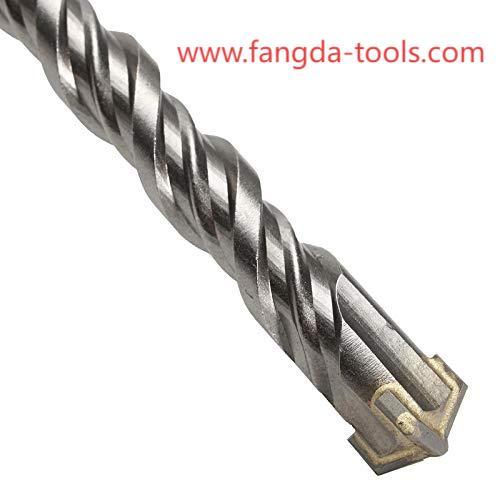
Choosing suitable drilling equipment is an important part of preparing masonry work. An SDS Drill Bit can support rotary and impact drilling applications, while fangda-tools provides practical tooling options for construction, renovation, installation, and workshop environments. Matching the accessory with the equipment and material helps users establish a clear and organized approach...
Slippers and sandals where is everyone getting these amazing quality Hermes oran sandals, if you are looking for high quality Hermes sandals or Hermes h slippers we Firstmirror is your best choice here, we Firstmirror sandals and slippers from Hermes are designed as the same as authentic, even the material is the same comes with box and what you see are exactly what you will get. Will you...

A virtuális valóság és az online szerencsejátékok találkozása 2026-ban: Az immersive élmények forradalma és a játékosok pszichológiai reakciói Az online szerencsejátékok folyamatosan fejlődnek, és a technológiai https://xon.bet/hu/casino/new...
The Thermal Camera Market Forecast suggests that the industry is entering a decade of sustained growth, with technological advancements and increased adoption in emerging sectors playing a key role. As the cost of manufacturing sophisticated thermal sensors continues to drop, the barrier for widespread implementation is effectively removed, allowing industries that were previously priced out...