


How Can ERG High-Capacity Vanadium Flow Battery Stacks Support Storage
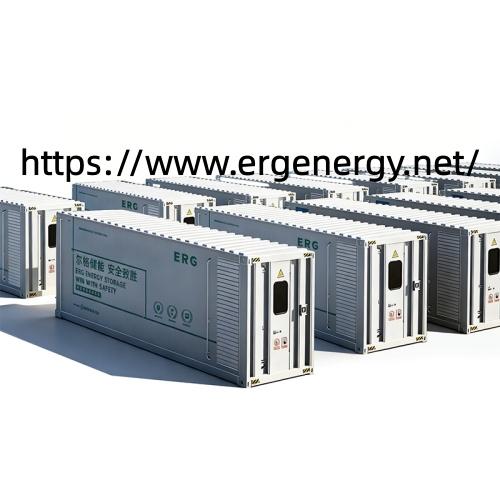
High-Capacity Vanadium Flow Battery Stacks can support energy storage projects that require sustained electricity delivery over extended periods. Unlike battery technologies where energy and power are closely linked within the same cells, flow battery architecture separates these two functions. The stack determines the electrochemical power conversion, while the electrolyte tanks influence how much energy can be stored. This design has attracted attention for applications involving renewable integration, microgrids, backup power, and longer duration storage. The U.S. Department of Energy notes that flow batteries can decouple power from storage capacity, with longer duration achieved through larger electrolyte storage tanks.
A major consideration for storage developers is the relationship between power and duration. A project may need a certain power output for several hours rather than a short burst of electricity. In a flow battery system, the stack and associated power conversion equipment handle the electrical side of the process, while additional electrolyte capacity can extend the available operating duration. This gives project designers more flexibility when matching equipment with actual load requirements.
Renewable energy integration is one area where this configuration can be useful. Solar and wind generation do not always follow the same pattern as electricity consumption. Solar production may reach its strongest levels during daylight hours, while demand can continue after sunset. Wind generation can also vary according to weather conditions. Storage can provide a way to shift available electricity toward periods when it is needed, depending on the project design and operating strategy.
Long duration storage is receiving increased attention as electricity systems incorporate more variable renewable generation. The U.S. Department of Energy has supported demonstrations involving vanadium flow batteries for applications including microgrids and extended discharge periods. One DOE supported project is designed around a vanadium flow battery capable of a 24 hour discharge duration for critical loads during outages.
Another important application is microgrid support. A microgrid may combine solar generation, storage, conventional generation, and controllable loads. During normal operation, storage can participate in energy management according to the sites operating strategy. During an interruption, the system may be configured to support selected loads for a defined period. The actual operating capability depends on system configuration, available stored energy, power electronics, controls, and site requirements.
Stack configuration also matters when designing a larger installation. Multiple stacks can be arranged to reach a required power level, while electrolyte storage can be sized separately according to the desired energy duration. This modular approach can help project engineers consider power and energy requirements as separate design parameters. Historical DOE project documentation has also described systems using multiple stacks arranged in parallel to reach a specified power output.
For buyers, the stack itself should not be evaluated in isolation. Flow rate, electrolyte composition, membrane characteristics, electrode materials, operating temperature, pressure, power conversion equipment, monitoring systems, and control architecture can all influence how a complete installation operates. Installation conditions should also be reviewed because pumps, tanks, piping, electrical equipment, and control systems need to work together as one integrated system.
Operational strategy is another important factor. Some projects may focus on renewable energy shifting, while others may require peak demand management or backup support. A facility with predictable daily demand can use a different control schedule from a site that experiences irregular industrial loads. Understanding the actual load profile before selecting equipment can therefore help buyers establish suitable power and energy specifications.
Safety and maintenance planning also deserve attention. Flow batteries use liquid electrolytes that circulate between tanks and the electrochemical stack. This means system design involves pumps, valves, piping, sensors, tanks, and monitoring equipment in addition to the electrical components. Proper maintenance procedures and monitoring can help operators track system conditions throughout the operating cycle. The DOE describes flow batteries as systems in which electrolytes are stored separately and moved to a stack during charging and discharging.
Cost evaluation should consider the complete project rather than only the battery stack. Equipment, installation, power conversion, tanks, electrolyte, controls, civil works, maintenance, and operating conditions can all contribute to project economics. Buyers can also compare expected operating duration and cycling requirements with the intended application before selecting a configuration.
ERG develops flow battery solutions with attention to different energy storage requirements and project configurations. For customers evaluating renewable integration, microgrid applications, backup planning, or longer duration electricity management, selecting suitable stack specifications is closely connected with the overall system design. Reviewing product information at https://www.ergenergy.net/ can help project teams examine available solutions while considering their required power, operating duration, site conditions, and application objectives.
Categorias
Leia mais
Hard Seal Ball is a precision-machined component used inside industrial valves to regulate fluid flow while maintaining reliable sealing under demanding operating conditions. It is commonly selected for applications involving elevated pressure, varying temperatures, abrasive media, and continuous production environments where dimensional accuracy and durable construction are important....

When individuals search for sources of equipment designed to manage the movement of liquids and gases, attention frequently turns toward a Naishi Ball Valve Factory . There, experienced individuals work with dedication to shape and perfect the components that play key roles in numerous piping arrangements. Material choice receives significant focus to support durability across a range of...
The future of the hempcrete market looks promising, with projections indicating a significant leap in market size from approximately USD 0.57 million in 2024 to an impressive USD 2.62 million by 2035. This growth, representing a compound annual growth rate (CAGR) of 14.8%, illustrates a rising demand for sustainable building materials that reduce environmental footprints. Hempcrete, derived...
Double Block and Bleed Ball Valves OEM/ODM provides tailored solutions for systems requiring secure isolation and pressure verification during maintenance or testing. These configurations allow operators to close off sections completely while offering a safe point to release or check trapped fluids, reducing risks in complex piping networks. Custom manufacturing adapts designs to fit specific...
The global Women High Heel Shoes Market is witnessing substantial growth as fashion-conscious consumers increasingly seek premium footwear that combines elegance, comfort, and durability. High heel shoes have evolved beyond formal occasions and are now considered essential fashion statements for daily wear, office attire, parties, and luxury events. Rising disposable income, changing fashion...