


What Should Buyers Check Before Choosing ballvalveballs Hard Seal Ball?
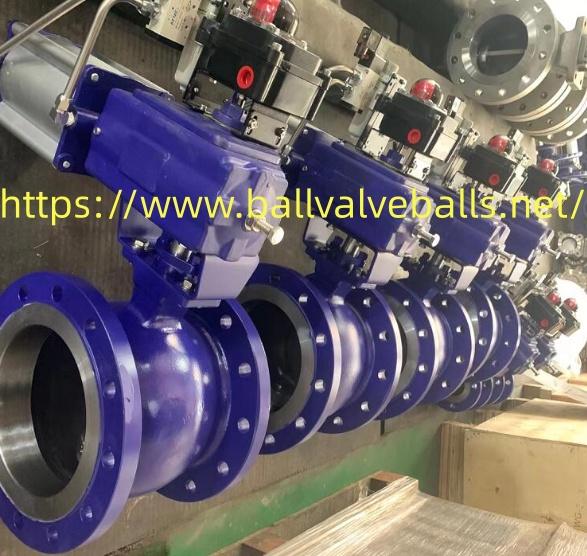
Hard Seal Ball selection should start with the valve design, operating environment, and technical requirements rather than appearance or price alone. Buyers should examine material grade, dimensions, spherical geometry, surface condition, seat compatibility, temperature, pressure, and production controls. A clear specification at the beginning can make supplier comparisons easier and help both sides avoid unnecessary changes after production starts.
Define the Application Before Ordering
Every valve operates under particular conditions, so buyers should provide the manufacturer with useful application information before requesting a quotation. Important details may include the working medium, temperature range, pressure, flow characteristics, operating frequency, and presence of abrasive particles.
A component used in a clean-water system may have different requirements from one installed in chemical processing equipment. Corrosive media, elevated temperatures, repeated cycling, and abrasive particles can all influence material and treatment decisions.
Providing complete application information allows the manufacturer to discuss specifications according to the actual working environment.
Confirm the Material Grade
Material selection should be based on the intended service conditions. Depending on the application, buyers may consider stainless steel, alloy steel, duplex grades, nickel-based alloys, or other engineering materials.
A general description is often not enough for industrial purchasing. Buyers should request the exact grade, applicable standard, and available material documentation. This information can help engineering teams verify whether the proposed configuration fits their project requirements.
For orders requiring traceability, purchasers can also ask how material identification is maintained throughout manufacturing.
Review Dimensional Requirements
Accurate dimensions are important because the component must fit correctly within the complete valve assembly. Buyers should provide drawings whenever possible, including outside diameter, bore size, dimensions, tolerances, connection features, and other relevant measurements.
Spherical geometry should receive particular attention. The curved surface needs to correspond with the mating seat so that the assembly can operate as intended.
Instead of checking only nominal dimensions, buyers can ask about measurement methods, tolerance control, roundness inspection, and final dimensional verification.
Examine Surface Finishing
Surface finishing can influence how the component interacts with its mating parts. Depending on the working environment, manufacturers may offer different treatment options, including nickel plating, chrome-related treatments, carbide coatings, nitriding, or other engineered surfaces.
The appropriate treatment depends on factors such as corrosion exposure, wear conditions, temperature, pressure, and contact requirements.
Buyers should ask about the complete treatment process rather than focusing only on the name of a coating. Surface preparation, treatment thickness, grinding, polishing, and final dimensional control may all affect the finished result.
Check Compatibility With the Seat
The component should not be selected independently from its mating seat. Geometry, dimensions, material, and surface condition need to be considered as part of the complete assembly.
When purchasing replacement parts, buyers should provide the valve model, nominal size, seat material, and available drawings. If the original component has been removed from service, photographs and measurements can also provide useful reference information.
For customized projects, confirming these details before production can reduce the risk of receiving a configuration that does not match the existing assembly.
Ask About Machining Processes
Manufacturing processes can influence dimensional consistency and surface quality. Buyers should ask what equipment and machining methods are used for turning, grinding, polishing, drilling, coating, and final finishing.
For precision requirements, it can be useful to ask how measurements are performed between different manufacturing stages. A controlled process can help maintain the specified geometry from initial machining through final inspection.
Buyers ordering customized products can also request a drawing review before production begins.
Review Inspection Procedures
A visual inspection alone may not provide enough information for industrial components. Depending on the project, buyers may require dimensional measurement, roundness testing, surface inspection, hardness verification, coating checks, or material confirmation.
Before ordering, purchasers should clarify which inspection items are included as standard and which require special arrangements.
Inspection documentation can also be useful for project records. For repeat purchases, retaining approved specifications and inspection requirements can create a consistent reference for future orders.
Evaluate Custom Manufacturing
Some projects require specific dimensions, material grades, surface treatments, or port configurations. Buyers should determine whether the supplier can manufacture according to technical drawings rather than assuming every manufacturer offers the same level of customization.
ballvalveballs provides different options for valve component applications, including material and surface-treatment configurations. Buyers can communicate their technical requirements and discuss suitable production arrangements before confirming an order.
It is also helpful to ask about sample development, minimum quantities, production schedules, drawing approval, inspection, and packaging.
Consider Production Planning
Production scheduling should be discussed together with order quantity and technical complexity. A useful purchasing timeline can include drawing confirmation, sample approval, material preparation, machining, treatment, inspection, packing, and shipment.
Breaking the process into stages makes it easier for buyers to track progress and coordinate their own manufacturing or maintenance schedules.
International purchasers should also confirm packaging requirements, labeling, quantities per carton, pallet arrangements, and shipping documentation before production is completed.
Look at Communication Quality
Clear communication can make technical purchasing more efficient. Buyers should consider whether product questions receive specific answers, whether drawings are reviewed carefully, and whether modifications are confirmed before manufacturing.
For long-term purchasing relationships, consistent communication can also help when specifications need to be repeated for future orders.
A practical supplier checklist can include application conditions, material grade, dimensions, geometry, surface treatment, seat compatibility, machining, inspection, customization, production planning, packaging, and communication. Buyers interested in reviewing manufacturing capabilities and available product information can visit ballvalveballs at https://www.ballvalveballs.net/ to discuss specifications and sourcing requirements with the manufacturer.
Categorias
Leia Mais
Light Detection and Ranging (LiDAR) technology has quickly evolved from a specialized surveying tool into a foundational building block for modern technology. By emitting rapid laser pulses and measuring their reflection time, LiDAR systems generate high-resolution 3D spatial maps in real time. Beyond autonomous vehicles (AVs), LiDAR is accelerating advancements in robotics, smart city...

The increasing complexity of modern biologic medicines has created greater demand for specialized analytical capabilities throughout drug development. Large molecules such as monoclonal antibodies, fusion proteins, biosimilars, cell therapies and gene therapies require analytical approaches capable of generating reliable information about their behavior and performance. The large molecule...

Para comparar tragamonedas online en Argentina, conviene distinguir entre una ficha de catálogo y una reseña extensa. CrashJuegos combina fichas, guías y comparativas; Game Cave Argentina organiza reseñas de tragamonedas con datos resumidos de mecánica, RTP, volatilidad y proveedor.Ambos sirven para descubrir títulos, pero los datos...

Comprehensive evaluations offer clear visibility into the Decentralized Finance Market Analysis, detailing total value locked (TVL), fee generation, and segment-specific contributions. Quantitative assessments indicate that decentralized lending and borrowing protocols capture the largest share of commercial activity, driven by yield generation demands. Meanwhile, liquid staking and derivatives...

HIF1A antibodies are a cornerstone of modern biomedical research. Demand is growing across academia, biotech, and pharma. Here are five reasons why. First, cancer research. HIF-1 alpha is central to tumor biology, making antibodies essential for studies. Second, drug discovery. They help screen compounds that target the HIF pathway. Third, diagnostics. They support biomarker detection. Fourth,...
