


What Should Buyers Check Before Choosing carbidebursfactory Carbide Rotary Burs?
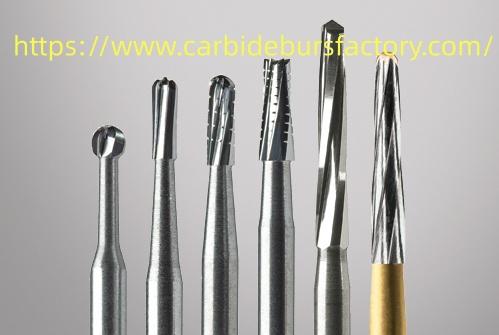
Carbide Rotary Burs should be evaluated according to the actual machining task, equipment, and workpiece rather than product appearance alone. Buyers need to review head geometry, tooth arrangement, dimensions, shank size, working length, material compatibility, operating conditions, and manufacturing consistency. For distributors, workshops, and industrial purchasing teams, a detailed evaluation can make it easier to select suitable specifications and communicate requirements clearly before production.
Identify the Workpiece First
The workpiece should be the starting point of the selection process. Different metals can respond differently during cutting, so buyers should provide information about the material being processed, its hardness, surface condition, and expected result.
Steel, cast iron, stainless steel, aluminum alloys, copper alloys, and other materials may require different cutting configurations. The amount of material that needs to be removed also matters. A task involving heavy shaping may require a different configuration from a finishing operation.
Providing the manufacturer with actual application information can therefore be more useful than simply requesting a commonly used specification.
Match the Head Profile to the Working Area
The shape of the working head has a direct relationship with accessibility. Buyers should first identify the surface that needs to be processed and then consider which profile can reach that area comfortably.
Cylindrical forms can suit certain flat surfaces and edges. Rounded profiles may work around curved sections, while tapered designs can provide access to narrower spaces. Ball-shaped forms can be useful for recessed or curved areas.
The product range from carbidebursfactory includes several profiles such as cylindrical, ball, oval, tree, flame, and conical designs, giving buyers different geometries for comparison.
Choosing the profile according to the workpiece can help avoid situations where the tool reaches the general area but cannot contact the target surface effectively.
Compare Tooth Arrangements
Tooth arrangement is another detail that should receive attention. Different patterns can influence material removal, chip formation, operator control, and surface treatment.
For example, an aluminum-oriented configuration may be considered for materials that generate longer chips, while medium or double-cut patterns can be used for various metalworking tasks. The supplier information for several product lines lists aluminum, coarse, medium, fine, diamond, and double-cut configurations for different working conditions.
Buyers should therefore explain the material and intended operation before selecting a tooth pattern. This allows the supplier to discuss the available choices according to the actual application.
Check Dimensions Carefully
Dimensional compatibility is important when the tool will be installed on existing equipment. Buyers should confirm head diameter, working length, total length, shank diameter, and other relevant measurements.
The shank should match the collet or equipment being used. A mismatch can affect installation and handling, so the specification should be confirmed before an order is approved.
For repeat purchases, it is useful to keep a technical specification sheet containing the agreed dimensions. This document can serve as a reference for sample approval and subsequent production batches.
Consider Working Reach
The distance between the operator and the target surface can also influence product selection. Deep grooves, internal cavities, recessed sections, and narrow passages may create access challenges.
An extended design can provide additional reach in certain applications, but length should not be considered separately from head geometry. A longer tool may reach a difficult area but still be unsuitable if the working profile does not match the surface.
Buyers should therefore provide information about the depth, opening size, surrounding structure, and target area when discussing extended options. Recent guidance from the manufacturer also emphasizes evaluating workpiece geometry before choosing an extended-reach design.
Test Samples Under Real Conditions
A sample provides an opportunity to evaluate details that photographs cannot fully communicate. Buyers can inspect tooth formation, head dimensions, shank condition, surface finish, and overall construction.
For industrial applications, testing the sample on the actual workpiece can provide more useful information. Record the workpiece material, equipment, operating conditions, selected specification, and observed machining result.
If changes are required, this information gives the manufacturer a clearer basis for adjusting the product. Once an acceptable sample has been confirmed, its specifications can be recorded as a reference for future orders.
Review Manufacturing Capabilities
The manufacturing process should also form part of the supplier evaluation. Buyers can ask about grinding equipment, production control, joining methods, dimensional inspection, and strength testing.
carbidebursfactory states that its production uses five-axis CNC grinding machines and that its technical team has developed welding detection equipment based on the working principle of its products.
For buyers, production equipment is only one part of the assessment. It is also useful to understand how specifications are monitored during production and how inspection results are documented before shipment.
Discuss Custom Orders Clearly
Some businesses require special dimensions, particular head profiles, extended working lengths, customized packaging, or private labeling. These details should be discussed before production starts.
Buyers should ask about sample arrangements, minimum order quantities, production schedules, inspection procedures, packaging requirements, and delivery planning. Clear communication can reduce misunderstandings when an order includes several specifications.
For businesses purchasing regularly, the ability to discuss application changes directly with the manufacturer can also make future product adjustments easier.
Build a Practical Purchasing Checklist
Before confirming an order, buyers can prepare a checklist covering workpiece material, head profile, tooth arrangement, dimensions, shank size, working reach, equipment compatibility, sample results, inspection requirements, packaging, and delivery arrangements.
This approach shifts the purchasing decision from a simple price comparison toward a more detailed evaluation of application requirements. carbidebursfactory provides a range of product specifications and manufacturing information that buyers can review at https://www.carbidebursfactory.com/product/ By comparing product geometry, technical specifications, sample performance, customization options, and production support, businesses can select a suitable solution for their intended machining work.
Categorias
Leia mais
As per Market Research Future, the demand for intelligent, all-weather sensing solutions is surging across security, surveillance, and urban infrastructure applications. Traditional security systems that depend on cameras and infrared detectors often struggle in poor visibility, leading to false alarms or missed threats. This has spurred the adoption of millimeter wave radar technology, which...

Bilewater is the kind of place that makes me want to apologize to my controller. It is dank, dark, soaked in poison, and — worst of all — Shakra seems to have taken a personal holiday when you need her most. In Silksong, maps usually come from that traveling merchant, but Bilewater flips the script: you have to reach her before you can buy a map. As of 2026, this is still the route...
The global Granola Market presents a varied regional landscape, with each area exhibiting unique growth drivers, consumer preferences, and competitive dynamics. While North America remains the largest market, the highest growth potential lies in emerging economies. This global Granola Market analysis provides a deep dive into the key regions shaping the industry's future. Market...

Butane Gas Cartridge Factory selection requires buyers to review multiple aspects before starting a purchasing project. A suitable production partner should be evaluated through product specifications, manufacturing procedures, quality management, customization support, packaging arrangements, and communication methods. Instead of focusing only on price, buyers should understand how...
Safety requirements are creating growing opportunities for tempered and laminated products within the Flat Glass Market. These products provide enhanced performance compared with conventional annealed glass and are widely used in buildings, vehicles, and other applications. Tempered glass is processed through controlled heating and cooling to improve its strength. It is widely used in doors,...