How Does Moldpartsfactory Precision Positioning Block Support Mold Alignment
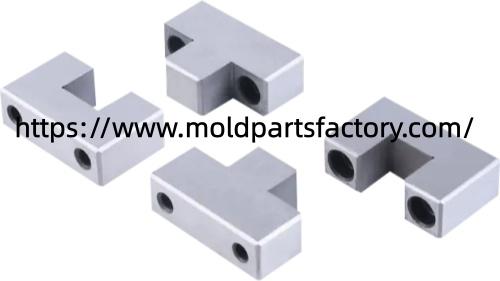
Precision Positioning Block selection should start with the actual mold structure rather than a catalogue dimension alone. Buyers need to consider where the component will be installed, how two mating sections will move, what level of positioning control is required, and whether enough surrounding material is available for secure mounting. Dimensions, tolerances, material, surface condition, fastening method, and maintenance access are practical points to review before an order is placed.
The overall mold layout is the first thing worth examining. A simple tooling structure may have plenty of room around the installation area, while a more complicated design can contain inserts, guide elements, ejector parts, sliders, and other mechanisms in a relatively small space. Each nearby component can affect where a positioning part can be installed and how it should interact with the rest of the tooling.
Dimensions should then be checked against the available mounting area. Length, width, height, hole locations, and fastening specifications all need to correspond with the mold drawing. A small dimensional mismatch can create additional fitting work during assembly. Comparing supplier drawings with the tooling design before machining or ordering can help identify potential conflicts at an early stage.
Tolerance is another important consideration. Positioning components are often used where the relationship between mating mold sections needs to remain controlled. The required tolerance should be determined according to the mold design rather than selected simply because a tighter figure sounds attractive. A suitable tolerance should match the manufacturing process, surrounding components, and intended application.
Material and surface treatment also deserve attention. Repeated contact can gradually affect component surfaces, particularly in tooling that opens and closes frequently. Buyers should check the material specification, hardness, heat treatment, coating, and finishing process where applicable. These details can help manufacturers assess whether a component is appropriate for the expected working environment.
The mounting surface should be checked before installation. It should provide a stable reference and have suitable flatness and cleanliness for the intended application. Dust, chips, burrs, or surface irregularities can interfere with accurate installation. Preparation may involve machining, grinding, cleaning, or measurement depending on the existing mold condition. Installation guidance from the supplier can also help technicians establish a consistent procedure.
The relationship between the component and nearby mechanisms is equally important. Buyers should inspect the complete movement path of ejector assemblies, inserts, slides, and other movable sections. There should be enough clearance for normal operation without unwanted contact. This review is especially useful for compact molds where several mechanisms operate close to one another.
Fastening deserves careful attention as well. The selected screws, holes, and mounting arrangement should correspond with the component design. Excessive tightening can affect certain precision parts, while insufficient fastening may allow unwanted movement. Following the specified installation procedure and using suitable torque control can help maintain the intended position after assembly.
A trial assembly is a practical step before regular production. Technicians can install the component temporarily, bring the mold sections together, and check alignment, clearance, contact, and movement. Measurement tools such as calipers, micrometers, gauges, or coordinate measurement equipment may be used according to the required tolerance. This process can reveal problems before they become part of a larger production adjustment.
Maintenance should also be considered during purchasing. A component may require periodic inspection, cleaning, lubrication, or replacement depending on its design and operating environment. Buyers should consider whether the installation area remains accessible after the mold is assembled. Easy inspection can make routine maintenance more manageable and help technicians identify unusual wear or movement at an earlier stage.
For custom tooling, communication with the manufacturer becomes especially useful. Providing detailed drawings, dimensions, samples, material requirements, installation conditions, and expected usage can help the supplier evaluate the application more accurately. Moldpartsfactory provides a range of mold components designed for different positioning and tooling requirements, with product configurations that can be reviewed according to individual mold structures.
Before confirming a purchase, manufacturers can prepare a simple checklist covering dimensions, tolerances, mounting position, material, surface treatment, fastening method, surrounding clearance, and maintenance access. This gives purchasing teams and engineers a common reference when comparing different options and discussing technical requirements with suppliers.
A thoughtful selection process does not need to be complicated. The key is to connect the component specifications with the actual tooling conditions. When drawings, measurements, installation requirements, and operating conditions are reviewed together, manufacturers can make a more informed purchasing decision and reduce avoidable fitting work during assembly.
Moldpartsfactory works with manufacturers seeking practical mold component options for different tooling structures and production requirements. Buyers can review positioning components, locating solutions, and related mold parts through the product range at https://www.moldpartsfactory.com/
Категории
Больше
Europe, France., October 9, 2026 — The global Probiotic Supplements Market is expected to witness strong growth as consumers increasingly prioritize digestive wellness, immune support, preventive health, and targeted nutritional solutions. According to Future Market Insights (FMI), the market was valued at USD 13.3 billion in 2025 and is projected to grow from USD 14.59 billion in 2026 to...

The form of magnesium hydroxide used by customers depends heavily on the requirements of the application. Liquid magnesium hydroxide currently holds the dominant position, supported by its extensive use in wastewater treatment and applications requiring efficient neutralization. The Magnesium Hydroxide Market is segmented into liquid and powder forms, with liquid magnesium hydroxide...

The traditional takeout model was built for speed and indulgence, often at the expense of nutrition. That framework is now being dismantled by a wave of innovation centered on wellness and simplicity. Convenient healthy food solutions are reshaping the entire ordering experience, from how menus are designed to how meals are packaged and delivered. These solutions prove that nourishing...
The relentless pursuit of decarbonization and enhanced energy efficiency across global industries has propelled power electronics into the spotlight of modern engineering and economic strategy. The power semiconductor market serves as the invisible backbone for a staggering array of applications, ranging from high-voltage direct current transmission lines to compact smartphone chargers. As...

El impacto de la inteligencia artificial en la personalización de la experiencia del usuario en casinos online para 2025 La inteligencia artificial (IA) ha irrumpido en una amplia gama de industrias, y los casinos online no son una excepción. A medida que avanzamos hacia 2025, la IA se convierte en una herramienta esencial para mejorar la personalización de la experiencia...