


Does Conductive Polystyrene Enhance Packaging Stability?
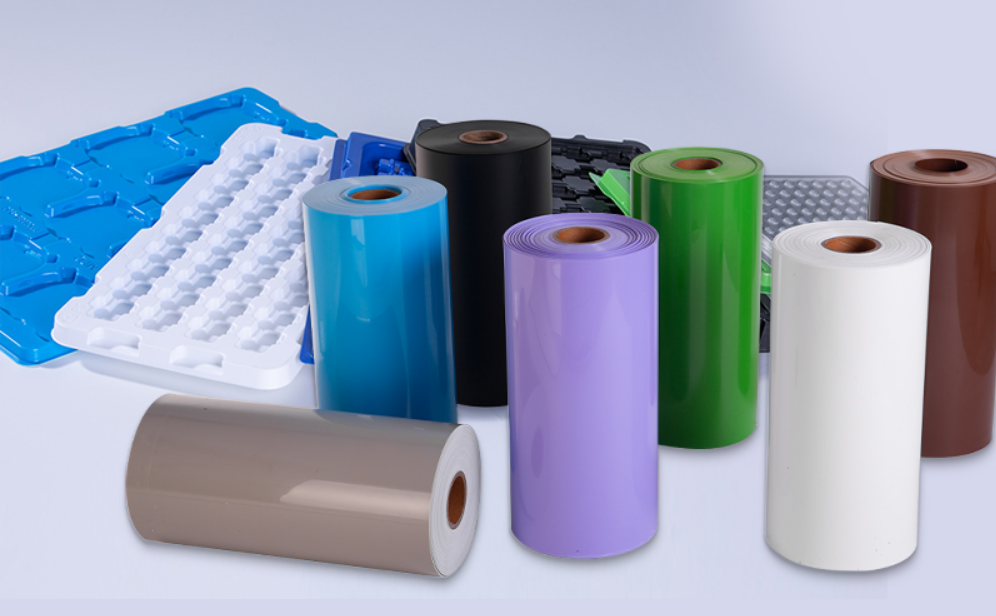
Modern electronic manufacturing environments rely heavily on materials that balance electrical performance and mechanical durability. As devices become smaller and more sensitive, packaging materials must not only protect against physical damage but also prevent electrostatic discharge during production, storage, and transport. This requirement has driven interest in engineered sheet materials such as tri laminate conductive black polystyrene, which combines conductive behavior with structural reinforcement through layered design.
Unlike conventional single-layer polystyrene sheets, a tri-laminate structure introduces functional separation between mechanical support and electrical conductivity. Each layer plays a distinct role in improving overall performance, especially in high-precision electronics handling environments.
Multi-layer engineering structure
A typical tri-laminate configuration includes:
Outer protective polystyrene skin
Conductive carbon black middle layer
Reinforced backing layer for stiffness
This structure allows designers to fine-tune mechanical strength and electrostatic behavior independently.
The conductive layer is usually formed using carbon black particles dispersed within a polystyrene matrix. These particles create conductive networks that allow charge dissipation across the material surface. Industry references show that carbon black loading levels in conductive polymers can range from approximately 5% to 25% depending on target resistance requirements.
Electrical performance and resistance range
The primary function of conductive polystyrene is to control static charge accumulation.
Typical performance ranges include:
Surface resistance: 10⁴ to 10⁸ Ω/sq
Volume resistivity: 10² to 10⁴ Ω·cm (conductive grades)
Dissipative grades: up to 10⁸ Ω/sq
These ranges allow controlled discharge of electrostatic energy rather than sudden spark events.
Carbon black-filled systems maintain stable conductivity even under varying humidity conditions, making them suitable for production and transport environments where climate conditions fluctuate.
Thermoforming and processing behavior
One of the major advantages of polystyrene-based conductive sheets is their thermoforming compatibility. The tri-laminate structure is designed to maintain integrity during heating and forming cycles.
Typical processing conditions:
Forming temperature: 140°C – 180°C
Sheet thickness range: 0.5 mm – 3.0 mm
Cooling cycle: controlled air or mold cooling
Forming methods: vacuum forming, pressure forming
Because the conductive filler is embedded within the structure, electrical performance remains stable after deformation.
Mechanical characteristics
Mechanical performance is critical for reusable packaging systems.
Key properties include:
Good rigidity for tray stacking
Impact resistance suitable for industrial handling
Dimensional stability during repeated use
Abrasion resistance to maintain surface conductivity
The tri-laminate structure improves stiffness compared to single-layer sheets, reducing deformation during heavy loading or robotic handling operations.
Application environments
The material is widely used in industries requiring ESD protection:
Semiconductor wafer carriers
PCB assembly trays
Automotive sensor packaging
Medical electronic device transport
Precision instrumentation logistics
Each of these environments requires predictable electrostatic behavior combined with mechanical durability.
Conclusion
The integration of layered architecture in tri laminate conductive black polystyrene provides a balanced solution for modern electronics packaging. By combining conductive carbon networks with structural reinforcement layers, the material supports stable electrostatic discharge control while maintaining processing flexibility. Its thermoforming compatibility and mechanical reliability make it suitable for automated manufacturing systems and repeated-use packaging applications.
الأقسام
إقرأ المزيد
Market Overview and Introduction The Electric Vehicle Dynamic Wireless Charging System Dwcs Market represents a revolutionary and rapidly emerging segment of the electric vehicle infrastructure industry, valued at 2.35 billion USD in 2024 and projected to grow to 25 billion USD by 2035 at an exceptional 24% CAGR. Dynamic Wireless Charging Systems (DWCS) enable electric vehicles to...

The growing economic Pico Projector Market Value highlights the expanding financial importance of miniaturized display engines within the broader global consumer electronics and commercial visual display industries. As digital communication shifts toward visual media, mobile presentation platforms, and immersive digital entertainment, the economic value generated by compact projection hardware...

Die Rolle von Cybersecurity im Online-Glücksspiel: Schutzmaßnahmen und neue Bedrohungen für die Branche im Jahr 2025 Das Online-Glücksspiel hat in den letzten Jahren exponentiell zugenommen, wodurch es zu einer https://hitnspin.casino/de/app/ wichtigen Branche mit Milliardenumsätzen geworden ist. Während diese Branche floriert, ist sie jedoch auch ein attraktives...

Outdoor electrical installations require equipment that can withstand changing environments while keeping power distribution organized and accessible. A Weatherproof db box from Nante offers a practical solution for protecting electrical components against everyday environmental exposure while supporting efficient cable management and convenient maintenance. Designed for a wide range of...
The Pharmacovigilance PV Market is characterised by intense competition among leading service providers, each striving to innovate and capture a larger share of the growing demand for drug safety solutions. Companies such as Parexel, Covance, IQVIA, and Accenture are at the forefront, investing heavily in research and development. These companies are competing on multiple dimensions, including...