Why Does Yarn Thickness Matter?
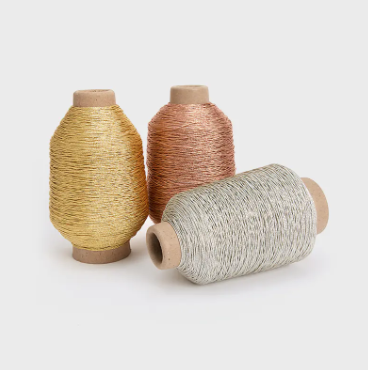
The production process of metallic yarn plays a key role in determining its appearance, stability, and usability in textile applications. Among various structures, M Type Metallic Yarn is widely recognized for its flat reflective surface and stable processing behavior in decorative textile manufacturing.
The manufacturing process starts with polyester film selection, usually PET-based material. The film thickness is commonly controlled within a range of 12μ to 25μ. Thinner films provide higher flexibility, while thicker versions offer improved handling stability during high-speed weaving. After film preparation, a vacuum metallization process is applied, where aluminum is deposited on the surface to create a reflective metallic layer.
Once metallization is completed, the film is coated with a protective epoxy layer. This coating is essential because it prevents oxidation, improves abrasion resistance, and helps maintain shine stability during textile processing. Without this layer, metallic surfaces may lose brightness or degrade under mechanical friction.
After coating, the film is slit into narrow strips. Standard width specifications include 1/69”, 1/100”, and 1/127”, depending on the final application. Narrower widths are typically used in embroidery threads, while slightly wider strips are suitable for weaving decorative fabrics. The cutting precision directly influences yarn uniformity and final fabric smoothness.
One of the important performance factors of M Type Metallic Yarn is its reflective efficiency. Because of its flat surface geometry, light is reflected in a consistent direction, creating a strong visual shimmer. This makes it suitable for applications where surface brightness is a key design requirement.
In terms of mechanical behavior, this yarn has moderate tensile strength because it lacks an additional supporting filament core. For this reason, production settings such as machine tension, needle size, and feeding speed must be carefully controlled. Excess tension may cause micro-cracks in the film structure, leading to reduced continuity during weaving or knitting.
Another technical consideration is heat response. During dyeing or heat-setting processes, temperature levels must be controlled to avoid deformation of the polyester film. Typical industrial processing temperatures are adjusted according to fabric type, but excessive heat exposure can reduce surface gloss or affect dimensional stability.
M Type Metallic Yarn is often used in combination with base yarns such as polyester, cotton, or viscose. This blending approach helps balance aesthetics and fabric comfort. For example, in lace production, metallic yarn provides visual contrast while the base yarn ensures structural softness.
Packaging also plays an important role in maintaining yarn quality. Industrial spools or cones are used to ensure stable unwinding during high-speed production. Proper winding tension helps prevent tangling and supports continuous operation in embroidery and weaving machines.
Overall, the manufacturing process of M Type Metallic Yarn is a combination of material engineering and precision processing. Each stage—from film selection to slitting—directly influences final textile performance, making it a carefully controlled material in decorative fabric industries.
Categorii
Citeste mai mult
The global Semiconductor Test Solutions Market was valued at approximately USD 6.564 billion in 2025 and is projected to reach USD 11.190 billion by 2034, registering a CAGR of 8.1% during the forecast period. The market outlook is detailed in a comprehensive new report published by Semiconductor Insight. The study highlights increasing semiconductor complexity, advanced process-node...

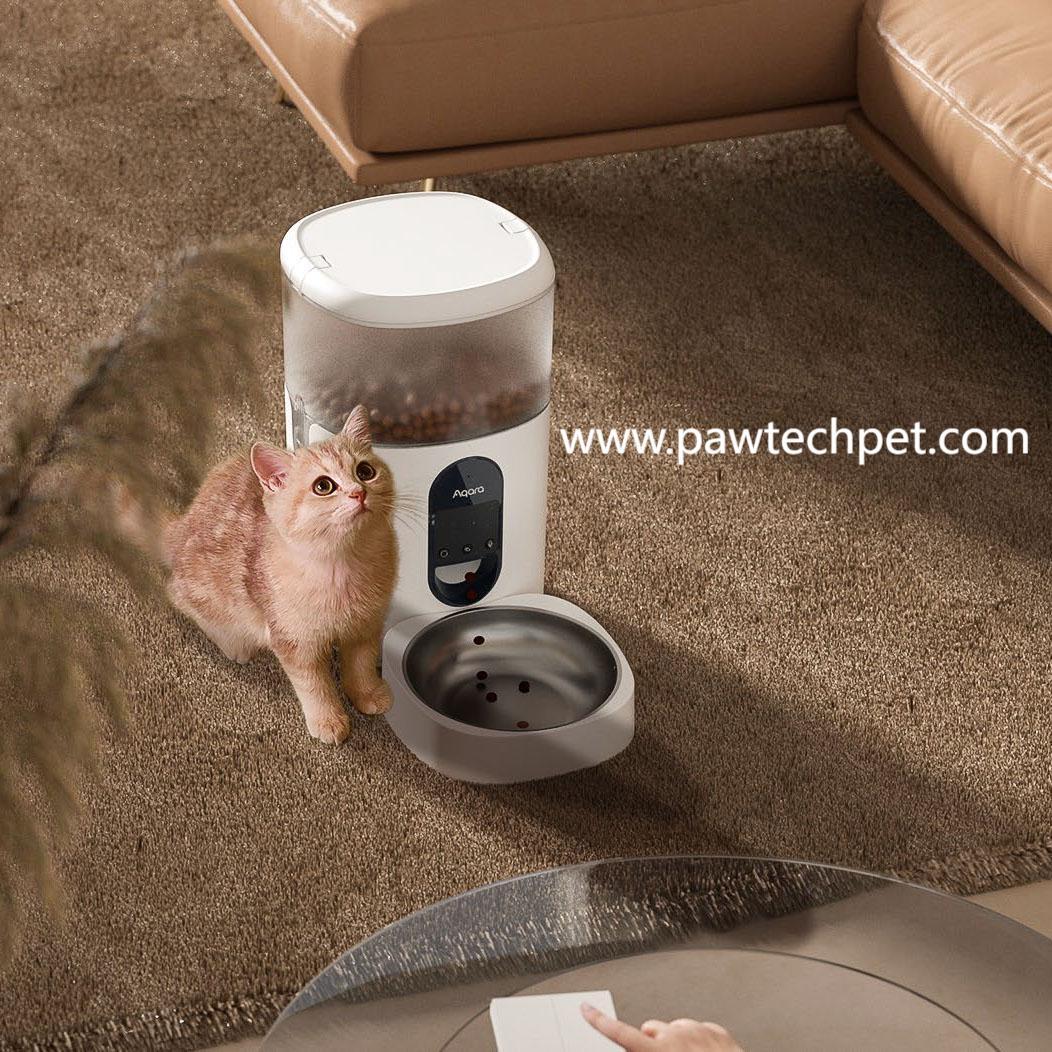
In a fast-changing digital lifestyle, Pawtechpet Pet Smart Appliances are shaping how families care for their animals at home. Connected feeders, intelligent litter solutions, and interactive monitoring tools are redefining everyday routines while keeping comfort and hygiene at the center. As homes become increasingly technology-driven, pet owners are seeking devices that blend design,...
Framtiden för sociala spel i onlinekasino 2026: Hur gemenskapsfunktioner och interaktiva plattformar förändrar spelupplevelsen och spelarengagemanget I takt med den snabba utvecklingen av digital teknik har onlinekasino blivit en central del av underhållningslandskapet. År 2026 förväntas sociala spel att ha blomstrat på dessa plattformar,...

The rise of the copper oxychloride market is emblematic of a broader trend towards sustainable agriculture, as stakeholders increasingly turn to biopesticides for crop protection. With a projected market size of USD 4.778 billion by 2035 and a steady CAGR of 4.4%, the copper oxychloride market growth reflects a growing demand for eco-friendly agricultural solutions. This shift...
Polyolefin (POF) Shrink Film from Jtpackage has gained recognition as a safe, versatile, and reliable packaging solution for food products. With increasing demand for hygienic, visually appealing, and secure packaging, manufacturers require materials that preserve freshness while enhancing presentation. How does POF shrink film achieve these goals while meeting strict food safety...