Why Does Structure Matter in Foot Massagers?
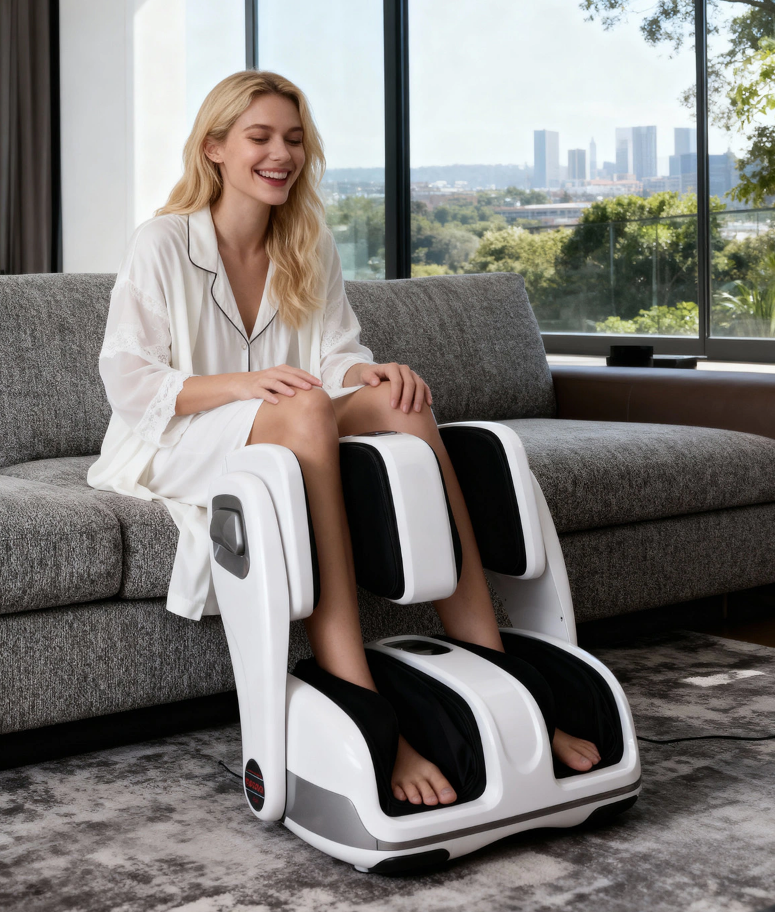
Foot massage technology has evolved from simple mechanical rollers into multi-system wellness devices integrating acupressure simulation, air compression, and thermal therapy. Behind this evolution, material engineering and structural design play a crucial role in determining performance, durability, and user comfort.
A professional Acupressure Foot Massager Factory focuses heavily on material selection during early-stage product development. Every component, from the outer shell to internal mechanical rollers, must be engineered to withstand repeated stress cycles while maintaining stable performance.
The outer housing is typically produced using ABS or ABS+PC composite materials. These plastics offer a balance of rigidity and impact resistance. Injection molding is used to create structural parts with wall thickness ranging from 2.0 mm to 3.5 mm. This ensures the casing remains lightweight while resisting deformation under long-term pressure.
Inside the unit, roller assemblies are usually manufactured from reinforced nylon or thermoplastic elastomer (TPE). These materials provide controlled elasticity, allowing the rollers to simulate finger-like acupressure motion. Roller diameter commonly ranges between 40 mm and 55 mm, depending on massage intensity design requirements.
An Acupressure Foot Massager Factory often integrates dual-layer internal structures. The upper layer supports mechanical massage systems, while the lower layer houses electrical components such as PCB boards, motors, and air pumps. This separation design reduces vibration interference and improves operational stability.
Air compression systems rely on silicone-based airbags. These airbags are strategically placed around heel, arch, and forefoot zones. Each airbag is engineered to withstand pressure cycles between 30 kPa and 100 kPa. This controlled inflation system creates rhythmic squeezing, enhancing circulation stimulation and muscle relaxation.
Heating components are usually constructed using carbon fiber heating sheets. These sheets are selected for their fast heat response and uniform thermal distribution. Operating temperatures are controlled within 38°C to 45°C, regulated by NTC temperature sensors to prevent overheating.
Electrical systems in modern designs are built around low-voltage DC architecture. Common voltage ranges include 12V, 24V, and 36V systems. These configurations reduce safety risks while ensuring consistent motor performance. Power consumption typically ranges between 30W and 60W depending on function activation.
Structural ergonomics is another critical focus area. Internal foot chambers are designed based on anatomical scanning data of human foot pressure zones. The heel section is reinforced with deeper cushioning, while the arch area integrates concentrated roller nodes. This design helps simulate acupressure pathways aligned with reflexology principles.
Noise control engineering is also important in production. Gear systems are treated with lubricated coatings to reduce friction sound. Motor housings are fitted with vibration-dampening pads to keep operational noise below 55 decibels in standard use conditions.
Within an Acupressure Foot Massager Factory, testing procedures include stress fatigue testing, thermal cycling tests, and motor endurance validation. Devices are typically run continuously for 48–72 hours during quality evaluation to ensure stability under real-world usage conditions.
Customization capabilities have become a standard requirement. Manufacturers can adjust roller density, air pressure intensity, heating zones, and control panel layout. Digital interfaces may include LCD panels or simple button-based controls depending on product tier.
Material safety compliance is also essential. All skin-contact surfaces must pass non-toxic certification testing. PU leather and breathable fabric linings are commonly used to ensure comfort while preventing skin irritation during long sessions.
As consumer expectations rise, material innovation continues to shape product performance. The integration of durable polymers, responsive heating systems, and precision air compression demonstrates how engineering inside an Acupressure Foot Massager Factory directly influences user wellness experience.
Категории
Больше
The functional confectionery market is undergoing a major transformation as manufacturers explore innovative ingredients to create healthier and more beneficial sweet treats. Consumers are no longer satisfied with traditional candies that offer only taste and indulgence. Instead, they prefer products that provide added nutritional benefits such as improved digestion, enhanced immunity, or...

Oilfield completion tools encompass the entire suite of equipment used to prepare a well for production. Electric packers are a key part of this revolution, representing a shift towards more intelligent, reliable, and efficient completion solutions. Industry observations from Market Research Future confirm that the electrification of completion tools is a major trend. The Shift...

The Premium Wine Market is being reshaped by a wave of innovation focused on sustainability, digital engagement, and premiumization. From organic wine production to direct-to-consumer sales, the industry is evolving rapidly to meet the demands of discerning consumers. This Premium Wine Market report explores the key trends and innovations shaping the sector's evolution. Market...

The scented candles market is experiencing steady expansion as consumers increasingly seek premium home fragrance products that enhance ambiance and relaxation. A growing inclination toward lifestyle upgrades and aesthetic home décor is driving demand for high-quality scented candles. Consumers are no longer viewing candles as simple lighting tools but as essential elements of interior...
SPC Flooring Factory plays an important role in helping users achieve a smoother installation experience through product development, manufacturing consistency, and practical design considerations. Whether used in residential renovation projects, commercial interiors, hospitality environments, or office upgrades, the quality of production directly influences installation efficiency and overall...