Nitinol vs. Stainless Steel: Inside the Materials Race in Guide Wires
Guide wire performance often comes down to what the wire is made of. Material choice affects flexibility, kink resistance, torque transmission, and navigability—the qualities that determine whether a procedure goes smoothly or turns difficult. In the peripheral guide wires market, the competition between nitinol, stainless steel, and emerging polymers is shaping product development and clinical outcomes.
The Peripheral Guide Wires Market reflects this material dynamic clearly. Nitinol holds the leading share of the material segment, valued at roughly USD 800 million in 2024 and projected to grow substantially by 2035. Its superelastic properties allow the wire to bend sharply without permanent deformation, making it ideal for tortuous peripheral anatomy. Stainless steel follows, prized for its stiffness and pushability—qualities useful when crossing tough lesions—and for its cost-effectiveness.
Polymer and composite materials are emerging challengers. Polymer-based wires can offer excellent flexibility and lubricity, and composite designs combine materials to balance properties—stiffer cores for pushability with flexible tips for atraumatic navigation. These innovations target specific clinical challenges, such as chronic total occlusions and calcified lesions where conventional wires may struggle.
Coating technology is a parallel frontier. Hydrophilic coatings reduce friction and improve tracking through tight spaces, while hydrophobic coatings improve tactile feedback. The trend is toward tailored surface properties matched to procedural needs rather than one-size-fits-all solutions.
Clinically, the material choice matters for outcomes and efficiency. Better navigation can reduce procedure time, contrast use, and radiation exposure—benefits that resonate with both clinicians and payers. Manufacturers are investing in clinical evidence to support premium pricing for advanced wires.
Geographically, material preferences vary. Advanced markets adopt premium nitinol and coated wires readily, while cost-sensitive markets favor stainless steel. As emerging markets develop, demand for higher-performance materials is expected to rise.
Looking ahead, material innovation will remain a key battleground. Bioresorbable or smart-material concepts remain exploratory, but incremental improvements in alloy composition, coating durability, and hybrid designs will continue. For manufacturers, differentiation through materials science—backed by clinical evidence—is the surest path to premium positioning in a competitive market.
People Also Ask
Why is nitinol used in guide wires?
Nitinol is superelastic and kink-resistant, allowing wires to navigate tortuous vessels without permanent deformation—ideal for complex peripheral anatomy.
Are stainless steel guide wires still used?
Yes—stainless steel offers stiffness, pushability, and cost advantages, making it useful for tough lesions and price-sensitive markets.
Tags
#Nitinol #StainlessSteel #GuideWireMaterials #VascularIntervention #MedicalDeviceInnovation #PeripheralGuideWires
Kategoriler
Read More
The global Door and Moulding Retail Market is experiencing steady growth driven by increasing demand for both residential and commercial renovations, which necessitates updating door and moulding features. This comprehensive Door and Moulding Retail Market analysis explores the evolving landscape of interior and exterior doors, mouldings, and related building products sold through...

Remodeling your home is one of the most effective ways to improve comfort, increase property value, and modernize your living space. Whether you are updating a kitchen, renovating a bathroom, or doing a full home transformation, hiring the right remodeling contractors is the most important step in the process. A skilled contractor can turn your vision into reality while keeping your project on...

The anesthesia machine market is evolving rapidly, driven by technological innovation, changing clinical practices, and a growing emphasis on patient safety and efficiency. These trends are not just reshaping product design—they are redefining how anesthesia is delivered and monitored in surgical settings. Analyzing these shifts provides a roadmap for understanding the future direction of...

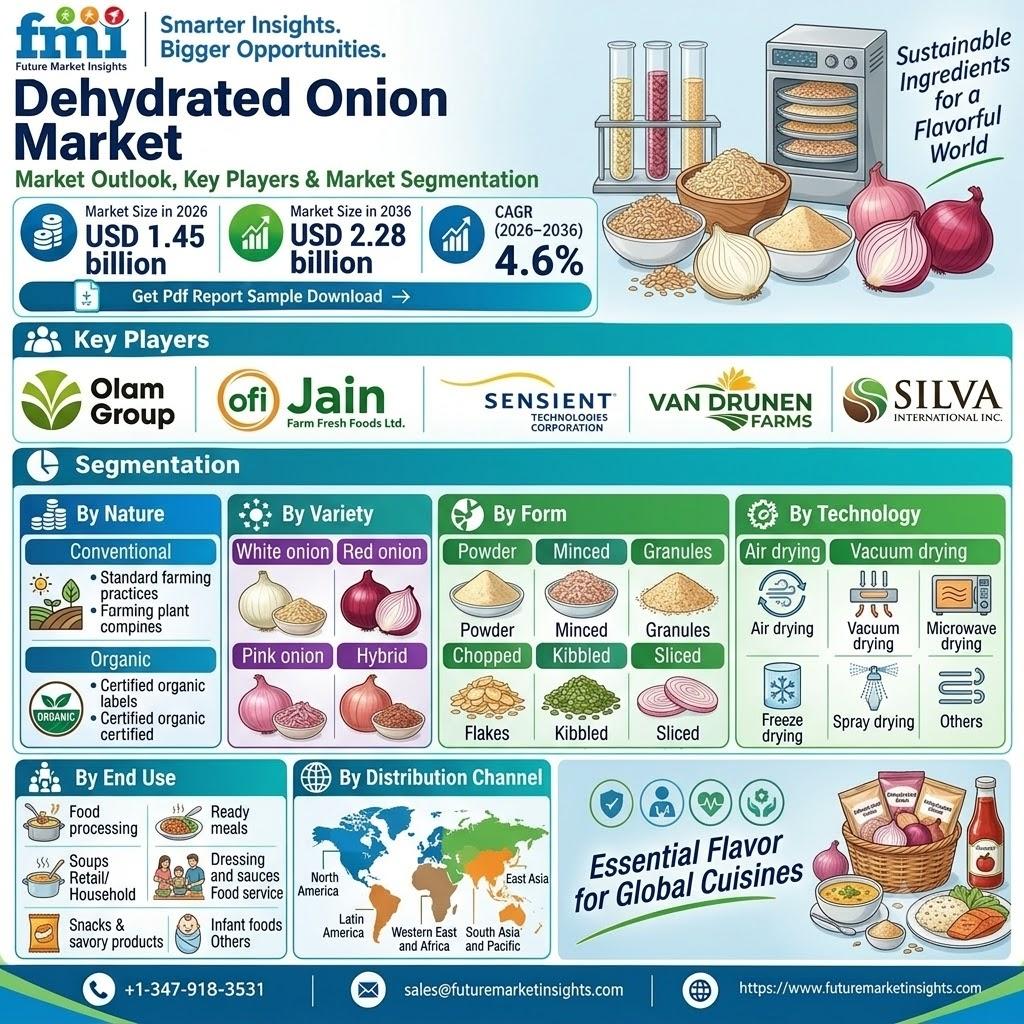
NEWARK, Del., October 9, 2026. — The global dehydrated onion market is estimated at USD 1.45 billion in 2026 and is projected to reach USD 2.28 billion by 2036, expanding at a CAGR of 4.6% from 2026 to 2036, according to Future Market Insights (FMI). The market stood at USD 1.385 billion in 2025. The growth outlook is being shaped by increasing production of processed and convenience...
Introduction Automation relays are essential components in modern industrial systems, facilitating the control of electrical circuits and systems with high precision and reliability. These relays are integral to the functioning of automated processes, from factory production lines to advanced control systems in industries such as automotive, energy, telecommunications, and manufacturing. As the...