Rubber Adhesive Agent Selection Guide from DongHai Chemical
Footwear manufacturing involves multiple bonding stages where the interface between rubber outsoles and other shoe components determines final product integrity. A rubber adhesive agent functions at this interface, transforming two separate surfaces into a unified structure capable of withstanding flexing, impact, and environmental exposure. DongHai Chemical, operating through yg-1, has served rubber processors since the 1980s with auxiliary chemicals designed for industrial adhesive applications. The question is not whether adhesion matters in shoemaking, but rather how formulators select and apply the right adhesive system for each production scenario.
Rubber outsoles present a particular challenge because their surfaces resist wetting by many conventional adhesives. Without adequate treatment or formulation, bonds may appear acceptable at inspection yet fail prematurely in the field. Adhesive systems for footwear must account for the specific rubber compound used, the substrate being bonded to it, and the conditions under which the finished shoe will perform. A compound designed for general rubber-to-rubber bonding may not deliver the same result when the receiving surface is leather, textile, or polyurethane. This variability explains why footwear manufacturers typically evaluate adhesive candidates against their actual production substrates rather than relying on generic specifications alone.
Application method influences outcomes as much as formulation. Adhesive applied too thinly may leave insufficient material to bridge surface irregularities, while excessive application can create thick glue lines that crack under repeated flexing. Open time, the interval between adhesive application and mating of surfaces, requires attention as well. A system that tacks too quickly may not allow adequate positioning during assembly, while one that remains tacky too long can slow production and attract contaminants. Footwear lines operate at defined tempos, and adhesive behavior must align with those rhythms. The practical question for production managers is whether their current adhesive suits the line speed, or whether reformulation could reduce bottlenecks without sacrificing bond quality.
Temperature conditions during storage, application, and cure affect adhesive performance in ways that laboratory data may not fully capture. A formulation that performs well in controlled testing may behave differently in a factory where ambient humidity shifts through the day. Crystallization behavior in polychloroprene-based systems, for example, influences initial bond strength development and heat resistance. Manufacturers benefit from understanding how their chosen adhesive responds to seasonal changes in plant conditions rather than discovering these sensitivities after a bond failure occurs. The same principle applies to substrate variability. Rubber compounds from different suppliers or production lots may differ slightly in surface chemistry, and an adhesive that bonds one batch flawlessly may struggle with the next. Robust footwear operations build in verification steps rather than assuming consistency.
DongHai Chemical maintains a product portfolio that includes adhesive agents and related rubber auxiliaries developed for industrial applications. The company operates as a manufacturer rather than a distributor, which allows direct communication between technical staff and customers regarding formulation adjustments. For footwear manufacturers evaluating adhesive options, this direct channel can shorten the trial-and-error cycle that often accompanies substrate changes or line modifications. Access to clear technical information reduces the risk of selecting a system based on price alone without understanding its performance boundaries.
Selecting a rubber adhesive agent for footwear production involves balancing bond strength requirements against processing constraints, substrate compatibility, and long-term reliability. No single formulation serves every scenario, and manufacturers who treat adhesive selection as a strategic decision rather than a commodity purchase tend to encounter fewer field failures. DongHai Chemical positions itself as a resource for these decisions, offering both products and the technical context needed to apply them appropriately. For footwear operations seeking to stabilize bonding outcomes and reduce rework, examining adhesive choices with the same rigor applied to other critical materials represents a practical starting point. Detailed information on available categories can be found at https://www.yg-1.com, a resource that helps manufacturers match adhesive type to application requirements before committing to production trials.
Категории
Больше
Silicone adhesives are widely recognized for their exceptional bonding strength, flexibility, and resistance to extreme temperatures and environmental conditions. These properties make them ideal for applications across industries such as construction, automotive, electronics, and healthcare. As industries increasingly demand durable and versatile bonding solutions, silicone adhesives are...

Global Magnetostrictive Linear Displacement Transducers (MLDT) Market, valued at a robust US$ 353 million in 2024, is on a trajectory of significant expansion, projected to reach US$ 604 million by 2032. This growth, representing a compound annual growth rate (CAGR) of 8.2%, is detailed in a comprehensive new report published by Semiconductor Insight. The study highlights the critical role...
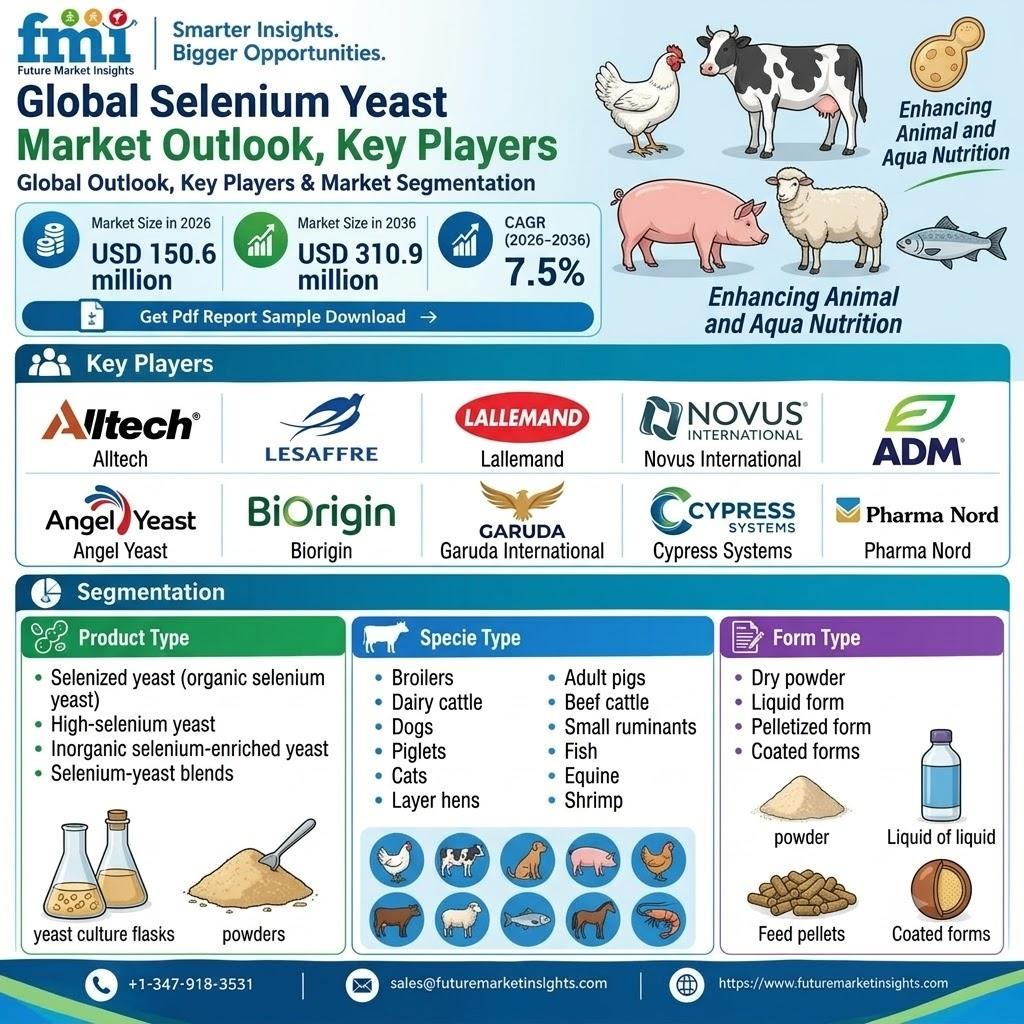
Selenium Yeast Market ,UK - CAGR 9.5%, Japan - CAGR 8.6% NEWARK, Del., October 8, 2026. — The global selenium yeast market is estimated at USD 150.6 million in 2026 and is projected to reach USD 310.9 million by 2036, expanding at a CAGR of 7.5% from 2026 to 2036, according to Future Market Insights (FMI). The market stood at USD 140.1 million in 2025. The growth outlook is being shaped...
The Takaful sector is witnessing a significant shift towards digitalization, which is arguably the most influential trend currently impacting the industry. Insurers are leveraging artificial intelligence to refine underwriting processes, assess risk more accurately, and provide customized policy pricing that reflects modern consumer needs. This move toward a digital-centric model is not just a...

Geographic adoption patterns within the high-frequency communications sector reflect distinct regional priorities, regulatory frameworks, and telecommunication infrastructure investments. The Asia-Pacific region currently holds the dominant leadership position in hardware manufacturing and network deployment scale. Reviewing global Millimeter Wave Technology Market Share distribution highlights...