Fluorescence Imaging Is Changing What Surgeons Can See
Human eyes can only see so much. During surgery, critical structures such as nerves, blood vessels, and tumor margins may be difficult to distinguish from surrounding tissue, even under bright operating lights. Fluorescence imaging addresses this limitation by using contrast agents that glow under specific wavelengths of light, making targeted tissues visible in ways that conventional white-light imaging cannot achieve. This technology is rapidly becoming a standard tool in certain surgical specialties.
The applications are diverse and expanding. In hepatobiliary surgery, fluorescence imaging can highlight bile ducts, reducing the risk of injury. In colorectal and gastric surgery, it can help visualize blood flow to anastomoses, potentially lowering leak rates. In oncology, it can help identify tumor margins and sentinel lymph nodes. Each application uses different agents and imaging parameters, and systems must be flexible enough to support multiple protocols. As clinical evidence accumulates, adoption is spreading. The Surgical Visualization System Market is increasingly shaped by fluorescence capability, with hospitals prioritizing systems that can integrate this functionality into existing workflows.
Challenges remain. Contrast agents must be approved and safe, imaging protocols must be standardized, and surgeons must be trained to interpret fluorescence signals correctly. Cost is also a factor, since fluorescence-capable systems are more expensive than standard visualization towers. Nonetheless, the clinical value in specific procedures is compelling, and ongoing research is likely to expand the list of applications where fluorescence imaging becomes standard practice.
People Also Ask
What is fluorescence imaging in surgery?
It uses contrast agents that emit light at specific wavelengths to make certain tissues visible, helping surgeons identify structures such as vessels, ducts, and tumor margins.
Which surgeries use fluorescence imaging?
Common applications include hepatobiliary, colorectal, gastric, breast, and gynecologic surgery, particularly for identifying anatomy and assessing tissue perfusion.
Tags: #FluorescenceImaging #SurgicalImaging #OncologySurgery #ImageGuidedSurgery #SurgicalTechnology #MedicalDevices
Categories
Read More
Choosing the right guitar shape can make a huge difference in comfort, playability, and long-term learning success. Among modern acoustic designs, the Auditorium Cutaway body style has become one of the most popular choices for both learners and experienced players. At the same time, many new players search for the Best acoustic guitars for beginners to start their musical journey with...

According to Market Research Future, the high voltage power transmission equipment market focuses on the specialized apparatus enabling efficient bulk power transfer across transmission networks. These critical components facilitate the movement of large amounts of electricity from generation sources to load centers, forming the backbone of modern power systems. Understanding Transmission...

In a packaging environment where smooth production and adaptable manufacturing matter, the Rotary Cap Compression Moulding Machine from Capping-Machine offers a practical approach to shaping plastic closures through an organized rotary molding process. Modern manufacturers are increasingly interested in equipment that can fit naturally into established workflows while leaving room for changing...

Exploring the global Pressure Switch Market by application and region, covering HVAC, monitoring & control, safety & alarm systems, hydraulics & pneumatics, North America, Europe, Asia-Pacific, and other regions, with analysis of market dynamics, growth drivers, and future opportunities through 2035. The Pressure Switch Market segmented by application and region reveals diverse...

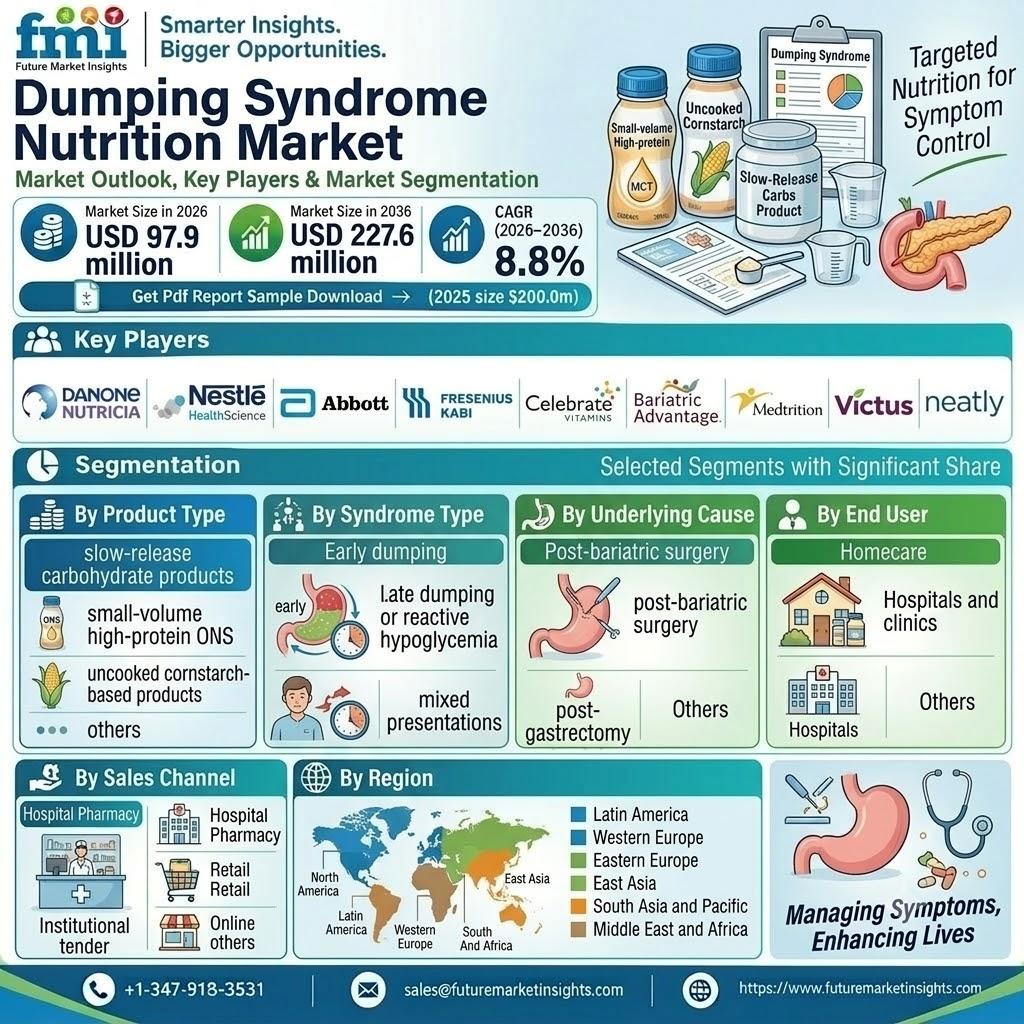
NEWARK, Del., October 9, 2026. — The global dumping syndrome nutrition market is estimated at USD 97.9 million in 2026 and is projected to reach USD 227.6 million by 2036, expanding at a CAGR of 8.8% from 2026 to 2036, according to Future Market Insights (FMI). The market stood at USD 90.0 million in 2025. The growth outlook is being shaped by increasing demand for dietary...