


Which Gangnammould Trash Bin Mould Details Shape Production Decisions
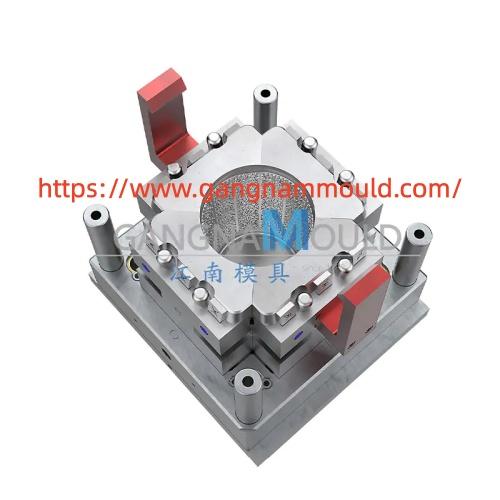
Trash Bin Mould development is being influenced by changes in how people organize, sort, move, and manage household waste. Modern containers are no longer limited to simple rectangular structures. Designers are working with rounded corners, divided compartments, fitted lids, integrated handles, wheels, nesting features, and space saving forms. These changes create new considerations for manufacturers when turning a product concept into a practical injection molded component.
One important shift is the growing attention to waste separation. Many households and commercial spaces use separate containers for different waste streams. This can create demand for coordinated products with different capacities, colors, shapes, or compartment arrangements. From a manufacturing perspective, related products may share certain dimensions while requiring different internal structures. Tooling needs to accommodate these variations without making production unnecessarily complicated.
Capacity is another major design consideration. A small container for a bathroom or office has different requirements from a larger unit intended for kitchens, public areas, workshops, or outdoor locations. Larger products may require careful attention to wall distribution, structural reinforcement, shrinkage, cooling, and ejection. When dimensions increase, the tooling strategy needs to account for the entire cavity rather than simply enlarging an existing design.
Wall thickness plays an important role in this process. Uneven sections can cool at different rates and may contribute to sink marks, warpage, or dimensional variation. Current injection molding design guidance continues to emphasize relatively consistent wall sections and gradual transitions where thickness needs to change.
The shape of the container can make this more challenging. Rounded corners are common in contemporary household products because they can create a softer visual appearance and reduce sharp transitions. However, every radius, corner, rib, handle, and recessed feature needs to work with the direction in which the tool opens.
Draft is particularly important for deep containers. Internal walls can grip the core as the material cools, while external surfaces may also require suitable taper for clean release. General injection molding guidance commonly places draft around 1 to 2 degrees for many untextured surfaces, although the actual requirement depends on material, texture, depth, and geometry.
Lid structures introduce another layer of design work. A lid may need a hinge, snap connection, sealing edge, opening tab, or overlapping section. These details can affect parting lines, sliders, lifters, ejection methods, and material flow. A seemingly small feature can therefore influence the entire tooling arrangement.
Handles also deserve careful attention. Integrated handles can improve usability, but they can create thicker areas or complicated transitions. Instead of simply adding material, designers can use ribs and supporting structures to provide stiffness while keeping the main wall reasonably consistent. Industry DFM guidance commonly recommends using ribs instead of unnecessary solid thickening to help manage cooling and sink mark risks.
Wheels are becoming relevant for larger containers because mobility can make handling easier. A wheeled structure requires suitable mounting areas and sufficient dimensional accuracy around the connection points. The surrounding geometry must also provide enough room for assembly and movement. These requirements should be considered before the cavity and core structure are finalized.
Surface appearance is another factor. Some products use smooth finishes, while others incorporate subtle textures to provide visual interest or improve grip. Texture affects draft requirements because deeper surface patterns can make release more difficult. Tooling engineers therefore need to evaluate texture depth together with draft and ejection rather than treating surface treatment as a final cosmetic decision.
Material selection can also influence development. Polypropylene, polyethylene, ABS, and other thermoplastics each have different processing characteristics. Flow behavior, shrinkage, cooling requirements, and dimensional behavior should be reviewed according to the selected grade. A design that performs well with one resin may require adjustments when another resin is introduced.
Gate location is closely connected with these material considerations. The position where molten resin enters the cavity influences filling direction, weld line location, pressure distribution, and appearance. For larger containers, engineers may need to study how the material reaches distant sections and whether the chosen arrangement provides balanced filling.
Cooling deserves equal attention. Large plastic components contain substantial surface area, and uneven temperature distribution can influence cycle time and dimensional stability. Cooling channels should be planned around the actual cavity geometry. Areas with thicker sections may require particular attention because they can retain heat longer than surrounding areas.
Production quantity should also influence tooling decisions. A project intended for regular large scale manufacturing may justify a different cavity arrangement and maintenance plan from a product produced in smaller quantities. The right configuration depends on expected demand, machine capacity, component size, resin, cycle requirements, and the customers production schedule.
Maintenance is another consideration that is sometimes overlooked during early development. Moving components, inserts, sliders, ejector systems, and cooling channels all need practical access for inspection and service. A tooling structure that considers maintenance from the beginning can make future production management easier.
Gangnammould works with manufacturers on plastic injection tooling projects by considering product geometry, material requirements, production volume, cavity structure, cooling, ejection, and other project specific factors. This approach allows the tooling plan to be connected with the actual product rather than treated as a separate stage.
For manufacturers developing new waste containers, early communication can save unnecessary revisions. Product drawings, three dimensional files, material information, expected quantities, surface requirements, and machine conditions can give engineers useful information before tooling construction begins. This also creates an opportunity to review difficult areas before they become manufacturing issues.
Current injection molding guidance continues to place strong attention on draft, wall thickness, ribs, gates, cooling, and manufacturability during the design stage. Reviewing these elements before cutting steel can help manufacturers identify potential production concerns while changes are still easier to make.
The market for household waste containers continues to accommodate different lifestyles and space requirements. Compact units may suit apartments and offices, while larger wheeled designs can serve kitchens, commercial spaces, workshops, and shared facilities. Divided configurations can also support different waste handling routines. These variations give product designers more room to develop practical concepts, while giving tooling manufacturers new engineering challenges.
Gangnammould can provide tooling solutions based on individual product drawings and manufacturing requirements. Manufacturers preparing a new project can review related products and tooling capabilities at https://www.gangnammould.com/product/
Categories
Read More
Handheld Axial Fan Manufacturer selection deserves more attention than simply checking a product photo and quoted price. Buyers usually have specific requirements related to airflow, working conditions, electrical supply, portability, operating time, and installation space. A clear understanding of these points can make the sourcing process easier and help both sides discuss a suitable...
Not many players hit free agency in the NFL by 25 years old, but the landed one of those on Friday. They've signed Juanyeh Thomas, . Thomas has spent his entire NFL career up to this point with the . Thomas played 36 games in his time with the Cowboys, recording a total of 62 tackles. He's originally from Florida, and he attended Gabriel Dumont Jersey Georgia Tech for college. Thomas went...

The air classifying mill market is experiencing unprecedented growth, with a market size expected to reach approximately $3.334 billion by 2035. This expansion reflects a compound annual growth rate (CAGR) of 7.32%, indicating robust demand for air classifying mills across key sectors such as food processing and pharmaceuticals. The surge in interest in fine particle milling solutions is...
The Integrated Sensing and Communication (ISAC) Waveform Design Market is gaining momentum as telecom operators, automotive companies, and technology developers seek to combine sensing and wireless communication capabilities within shared spectrum and hardware architectures. According to Semiconductor Insight, the global market was valued at USD 0.85 billion in 2025 and is projected to reach...
Travel can take many forms, from moving around familiar communities to preparing for longer journeys. A Travel Scooter Factory such as Sweetrichmobility can respond to these changing expectations by developing mobility products around convenience, practical handling, and adaptable design. Instead of focusing only on movement from one place to another, thoughtful product development considers...