Space Situational Awareness Market: Key Trends & Innovations

The Space Situational Awareness (SSA) Market is rapidly evolving, with technological innovation and new operational models reshaping the industry. From the deployment of dedicated tracking satellites to the integration of AI, the sector is advancing to meet the challenges of a congested and contested space environment. This article explores the key trends and innovations shaping the future of SSA.
Market Dynamics
Dedicated SSA Satellite Deployments
A major trend is the forecast rise in dedicated SSA satellite deployments through 2034. Driven largely by investments in Space Surveillance and Tracking (SST) and Space Domain Awareness (SDA) missions, SST satellites are expected to represent nearly half (49%) of all dedicated SSA spacecraft launched. This move toward space-based sensors is critical for overcoming the limitations of terrestrial networks, such as weather, daylight, and geographic coverage gaps.
AI/ML and Predictive Analytics
The integration of Artificial Intelligence (AI) and Machine Learning (ML) is revolutionizing SSA. There is an emerging role for AI/ML in predictive orbital analytics that integrate orbital mechanics models to account for perturbations and develop correlation windows for multi-day custody of objects. This is moving SSA from reactive tracking to predictive intelligence, enhancing automation and operator decision-making.
Public-Private Partnerships (PPP) and Sensor-as-a-Service
The SSA market is seeing strong interest in public-private partnerships and sensor-as-a-service models to accelerate coverage without overextending individual budgets. Commercial providers are increasingly being leveraged to provide continuous monitoring and scalable analytical tools, allowing governments to enhance resiliency and sensing diversity. This shift is a key factor in the growth of the commercial SSA data market.
Focus on Software and Data Fusion
There is a significant shift from hardware-centric solutions to cloud-native architectures and API-driven data fusion. This is enabling automation at scale and moving traffic coordination systems from prototypes to operational services. Licensing models are also diversifying, with on-premises deployments for classified enclaves and subscription-based SaaS for commercial fleets.
Regional Outlook
Innovation is global. North America is leading the development of space-based sensors and cyber-hardened ground segments. Europe is driving policy innovation in active debris removal and traffic coordination frameworks. In Asia-Pacific, investments are surging in indigenous SSA capabilities, including radar and optical tracking networks. Commercial innovation is most vibrant in the U.S. and Europe.
Competitive Landscape
Innovation is the primary competitive differentiator. Companies that can develop advanced AI for predictive analytics, build or integrate space-based sensor data, and offer flexible service or SaaS models are gaining an edge. The market is seeing increased collaboration between government agencies and commercial firms to develop next-generation solutions.
Conclusion
The SSA Market is being reshaped by a wave of innovation, from dedicated satellite deployments to the integration of AI and predictive analytics. The shift toward commercial services and public-private partnerships is creating a more dynamic and resilient industry, positioning SSA as a cornerstone of future space operations.
FAQs
1. How is AI being used in the SSA Market?
AI/ML are being integrated for predictive orbital analytics, enabling multi-day custody of objects and moving SSA from reactive tracking to predictive intelligence.
2. Why are dedicated SSA satellites important?
Space-based sensors are critical for overcoming the coverage gaps of terrestrial networks, providing continuous monitoring regardless of weather or daylight limitations.
3. What is "Sensor-as-a-Service" in the SSA context?
It is a model where governments or commercial operators procure SSA capabilities (like sensor data or analytics) as a service, rather than building their own infrastructure, through public-private partnerships.
Categories
Read More
Bacteria have diverse nutritional and environmental requirements, and successful culture depends on providing appropriate conditions. Culture media supply nutrients, while environmental factors such as temperature, pH, and oxygen influence growth. Understanding these requirements is essential for microbiologists and for manufacturers developing culture products. Culture media can be classified...

La influencia de las criptomonedas en el panorama de los casinos en línea: Nuevas dinámicas de mercado y preferencias de los jugadores en 2025 En los últimos años, el auge de las criptomonedas ha transformado numerosos sectores, y el mundo del juego en línea no awintura bono sin depósito es la excepción. Desde su creación, las monedas...

Recent analysis from Market Research Future indicates that the global ventilated seats market is experiencing steady growth, with a projected CAGR of 4.62% from 2025 to 2035 . A key technology enabling this comfort feature is the Ventilated seats cooling fan . These small, efficient fans are integrated into the seat structure to actively draw air away from the occupant's body and...

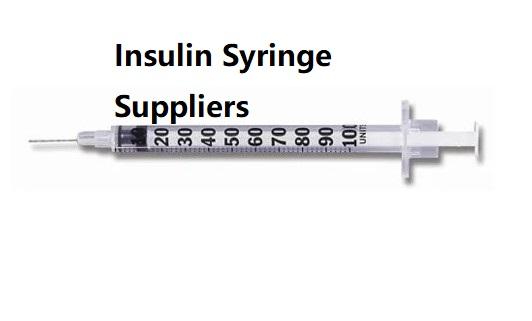
When medical buyers compare Disposable Syringe Suppliers , product selection often depends on more than price or basic availability, and reliable Disposable Syringe Suppliers should offer clear specifications, consistent production, suitable packaging, and flexible purchasing options. Disposable syringes are used across clinical, laboratory, pharmaceutical, and healthcare environments, so...
The Retail Industry is undergoing significant transformation, driven by AI integration, structural shifts in competition, and evolving consumer expectations. According to a Retail Industry analysis, key trends include the rise of generative AI as a shopping gateway, the structural split in retail competition, and the increasing importance of value-driven consumer behavior....