AndaElectric: A Women's Electric Epilator Built to Pass International Safety Audits
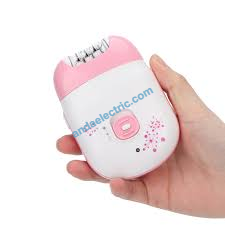
A factory in Zhejiang completes a production run of grooming devices destined for a European distributor. The devices look elegant, perform smoothly, and pack neatly into retail boxes. But before a single unit crosses an ocean, a stack of technical documents must travel ahead. An inspector in a laboratory will verify that every internal wire, plastic housing, and charging circuit meets local laws. This moment of scrutiny raises a critical question for any manufacturer or brand owner: what safety certifications should a Women's Electric Epilator have for international use? AndaElectric, a professional hair trimmer and electric shaver manufacturer with an annual capacity exceeding 600,000 pieces, answers this question through a portfolio of globally recognized compliance marks.
The first certification any international buyer seeks is CE marking. This mark is not a quality seal but a declaration that a product meets European Union safety, health, and environmental protection standards. For a Women's Electric Epilator, CE compliance involves testing the power adapter for electrical insulation, checking the plastic housing for flame resistance, and verifying that metal parts do not expose users to hazardous voltages. The Low Voltage Directive (LVD) and Electromagnetic Compatibility (EMC) Directive apply specifically to epilators because they contain motors and electronic circuits. A responsible manufacturer submits samples to a notified body for independent testing, keeping a technical file ready for market surveillance authorities.
For shipment to North America, a different set of marks takes priority. The ETL mark from Intertek or the cULus mark from Underwriters Laboratories indicates that a Women's Electric Epilator has passed North American safety standards. These tests focus on the risk of electric shock, fire, and mechanical injury. A epilator with a detachable power cord must withstand a pull test that simulates someone tripping over the cord. The housing must survive a drop test without exposing live parts. The battery charging circuit must prevent overcharging even if a faulty component fails. Unlike CE marking, which relies partly on self-declaration, North American marks require ongoing factory inspections and unannounced product audits.
RoHS compliance matters for any Women's Electric Epilator entering Europe, China, or several other regions. Restriction of Hazardous Substances (RoHS) limits lead, mercury, cadmium, hexavalent chromium, and specific flame retardants in electrical products. An epilator's circuit board solder must use lead-free alloys. The plastic coating on the power cord cannot contain certain phthalates. The metal tweezing discs must avoid cadmium plating. A compliant manufacturer works with component suppliers who provide material declarations, then tests finished products in an accredited laboratory. The resulting RoHS report accompanies every shipment to customs, preventing costly holds at the border.
The REACH regulation applies to the entire product as sold in Europe, including every chemical substance in a Women's Electric Epilator. REACH requires manufacturers to identify and manage risks from substances like nickel, which can cause skin allergies, or certain plasticizers that affect hormonal systems. A epilator's tweezing head, which contacts skin directly, must release nickel at levels below the migration limit. The handle's soft-touch coating cannot contain restricted phthalates. Achieving REACH compliance involves analyzing every component down to the screw level and maintaining a Safety Data Sheet for any imported chemical. This documentation extends beyond the factory to the entire supply chain.
For epilators with rechargeable batteries, battery safety certification adds another layer. The UN38.3 test simulates air transport conditions, subjecting battery packs to altitude changes, vibration, temperature extremes, and short circuits. A Women's Electric Epilator shipped by air must pass UN38.3 to comply with dangerous goods regulations. The IEC 62133 standard tests the safety of rechargeable cells for use in portable devices, covering overcharge protection, forced discharge, and thermal abuse. A manufacturer like AndaElectric selects certified cells from approved suppliers, then retests the assembled battery pack inside the epilator housing. This dual verification prevents battery fires during charging or transport.
The FDA registration process applies to epilators sold in the United States if they claim any therapeutic effect or use laser or intense pulsed light. Basic mechanical epilators that only remove hair by physical means do not require FDA premarket approval, but their manufacturing facility must register with the FDA and list the product. This registration allows customs to clear shipments and enables retailers to sell the product. A compliant manufacturer maintains current registration and responds to annual renewal requirements. The FDA also expects good manufacturing practices (GMP) for electrical medical devices, even for low-risk epilators, covering production records and complaint handling.
For epilators with wireless charging or high-power motors, the FCC mark is necessary for US sales. The Federal Communications Commission regulates electromagnetic interference that could disrupt radio communications. A Women's Electric Epilator with a switching power supply or a brushed DC motor emits radio frequency energy during operation. FCC testing measures these emissions in a shielded room, comparing them to legal limits. The product must also withstand external interference without malfunctioning. Passing FCC testing requires careful circuit board layout, proper shielding, and sometimes ferrite beads on internal cables. The FCC ID printed on the product label allows customs and retailers to verify compliance online.
The combination of these certifications creates a passport for global distribution. A Women's Electric Epilator with CE, RoHS, REACH, ETL, FCC, and UN38.3 can ship to Europe, North America, Australia, and many Asian markets without modification. Each mark requires ongoing vigilance: factory audits, component checks, and random product tests. AndaElectric maintains this compliance portfolio through an internal quality team and external laboratory partnerships. For buyers seeking a certified epilator that enters any market without border delays, the AD286R series represents a fully compliant option. Explore the technical specifications and certification documentation at https://www.andaelectric.com/product/lady-s-care/ad286r-set-epilator-for-main-head.html where safety meets global acceptance
Categorias
Leia mais
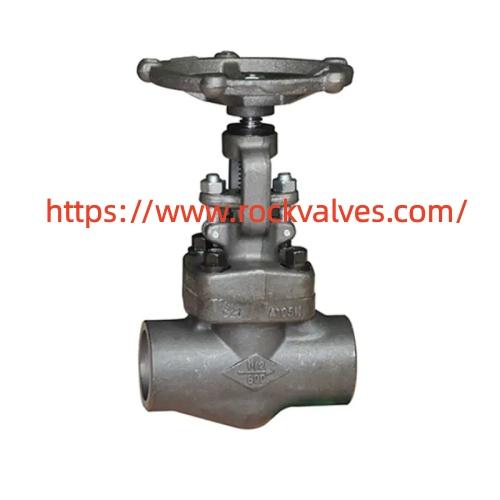
High Temperature Gate Valve performance under repeated heating and cooling depends on several interconnected aspects of construction and operation. Differential expansion ranks among the primary influences. When various parts of an assembly heat and cool at different rates because of distinct material coefficients or uneven exposure to process fluid the resulting dimensional shifts change...
The Tomato Processing market exhibits distinct regional dynamics, with Europe and North America maintaining leadership while Asia-Pacific emerges as the fastest-growing region. Understanding these regional nuances is crucial for stakeholders seeking to capitalize on market opportunities. According to comprehensive Tomato Processing Market analysis, North America is a major market with high...

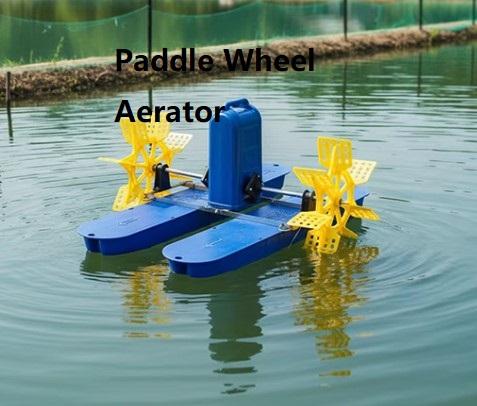
Keeping aquaculture equipment in good working condition depends heavily on the quality and suitability of replacement components. When an aerator operates for long hours, regular inspection and timely maintenance can help avoid unnecessary interruptions. In daily servicing, Main Spare Parts For Paddle Wheel Aerator play an important role in maintaining stable rotation, water movement,...
Roll Mouth Baking Paper Cupcake Liners are widely used in modern food production because their rolled edge design helps support product stability during preparation and heating. They are suitable for cupcakes, muffins, desserts, and many other individual food items. Businesses value this style because it contributes to organized production, convenient handling, and an attractive finished...

The worldwide commercial landscape for outsourced customer relationship management is characterized by regional specialization, diverse linguistic talent pools, and mature offshore delivery hubs. An assessment of the CRM Outsourcing Market Share reveals that market control is distributed across large multinational business process outsourcing (BPO) conglomerates, specialized IT service firms,...